Home / Technology / AI Hammers Scottish Poles for Smarter Grids
AI Hammers Scottish Poles for Smarter Grids
2 Feb
Summary
- AI-powered smart hammers inspect UK electricity poles remotely.
- AI boosts grid flexibility, enabling 15% more power transmission.
- AI optimizes wind turbines and predicts renewable energy generation.
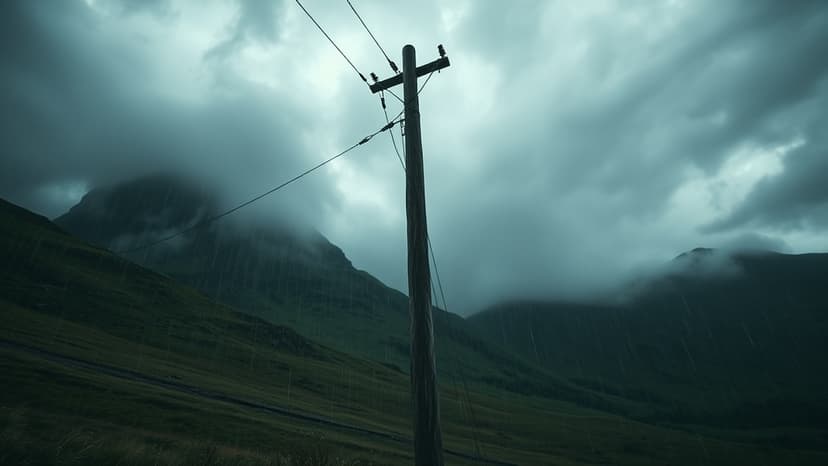
In Scotland's rugged highlands, UK utility SSE is adopting an AI-powered smart hammer for remote inspection of its vast network of wooden electricity poles. This technology uses neural networks to analyze sound patterns, offering a more precise assessment of pole integrity than manual methods.
Artificial intelligence is proving transformative across the energy sector, enhancing safety, efficiency, and sustainability. SSE is leveraging AI to optimize power transmission lines, safely increasing capacity by approximately 15%, thus improving grid flexibility and resilience.
AI also plays a crucial role in maximizing wind turbine output by predicting wind conditions and controlling blade orientation. Furthermore, it forecasts overall renewable energy generation based on weather, helping to balance the grid by determining necessary non-renewable energy inputs.
The decentralization of power networks further highlights AI's importance. It aids in managing complex dynamics from energy production to customer delivery, offering benefits in predictive modeling and grid balancing.
In the oil and gas industry, Saudi Aramco has identified over 400 AI use cases, generating nearly $2 billion in value through applications like reservoir modeling. The company is also developing its own energy-specific large language model.
The race for commercial nuclear fusion is also seeing significant AI integration. Companies and research institutions are using AI to stabilize plasma, predict performance, and develop virtual prototypes, accelerating development through digital twins.
Ultimately, AI's greatest potential lies in identifying cost savings for utilities, extracting value from data assets, and modernizing an industry with aging infrastructure, thereby supporting the ongoing energy transition.