Home / Technology / AI Boom Strains Asia's Grids and Water
AI Boom Strains Asia's Grids and Water
26 Feb
Summary
- Data center capacity in Asia is projected to triple by 2030.
- AI's demand on grids reliant on fossil fuels is a concern.
- New data centers exert pressure on stretched local water supplies.
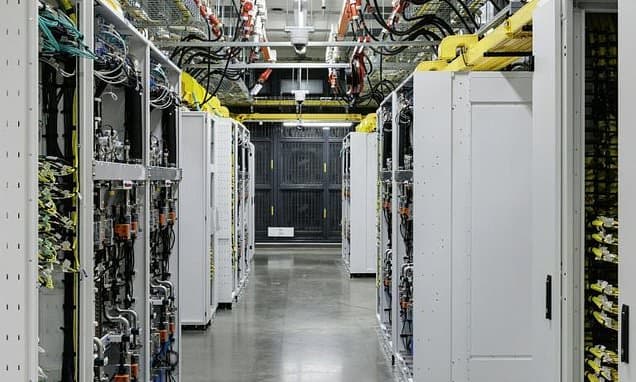
A significant construction boom in Southeast Asia is seeing technology giants invest billions in new data centers to power the surging demand for artificial intelligence tools. Microsoft, for instance, operates facilities near Jakarta, Indonesia, which are part of this expansion. Data center capacity in the region is anticipated to triple by 2030, largely due to a tenfold increase in AI usage.
However, this growth presents considerable challenges. Many of these new data centers will increase demand on power grids that continue to depend heavily on planet-warming fossil fuels. Additionally, the intense cooling requirements for servers place new pressure on local water supplies, which are often already strained. Microsoft is working to mitigate these issues by supporting renewable energy initiatives and implementing advanced closed-loop cooling systems.
Singapore, previously a data center hub, saw development pauses due to similar concerns. This has led to a surge in new facilities in neighboring countries like Malaysia, Thailand, Indonesia, the Philippines, and Vietnam. While governments see data centers as beneficial for economic growth and business efficiency, scientists warn that the strain on water resources could become more severe.