

Home / Technology / AI Agents Outpace Defenders: Security Clock Ticking
AI Agents Outpace Defenders: Security Clock Ticking
1 Apr
Summary
- Adversary breakout time has dropped to 27 seconds.
- AI agents are difficult to distinguish from human activity.
- AI agent ecosystems are increasingly targeted by supply chain attacks.
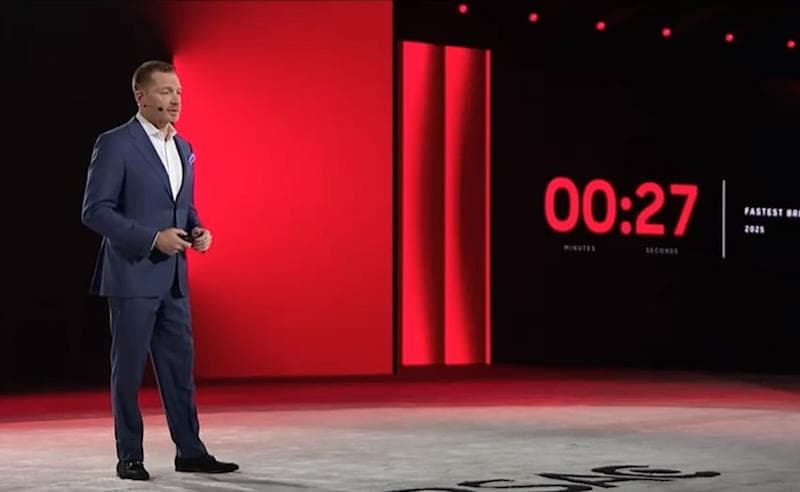
The cybersecurity landscape is rapidly evolving with the advent of AI agents, drastically reducing the time defenders have to react to threats. CrowdStrike CEO George Kurtz reported that adversary breakout time has plummeted to an average of 29 minutes, down from 48 minutes in 2024, with the fastest recorded time now at just 27 seconds. This acceleration is partly due to the sheer volume of AI applications and their detection events overwhelming traditional security workflows.
Adding to the complexity, AI agent activity often appears indistinguishable from human actions in security logs, making it challenging for security teams to monitor and control. Cisco's research indicates that while many enterprises are piloting AI agents, few have moved them into production due to these fundamental visibility and accountability gaps. The rise of AI agent ecosystems also presents new attack vectors, with supply chain attacks like ClawHavoc targeting these platforms, embedding malicious skills and backdoors.
Vendors are developing new architectures to manage this agentic SOC, with approaches including integrating AI agents within SIEM systems and enhancing upstream pipeline detection. CrowdStrike, for instance, is embedding analytics directly into its data ingestion pipeline and expanding its platform for external AI providers. Palo Alto Networks is also enhancing its AI security platform with artifact scanning and runtime protection. However, a significant gap remains as no vendor has yet provided a behavioral baseline for normal agent activity within an enterprise environment.
As AI adoption scales, with predictions of individuals managing up to 90 agents, the security response window continues to shrink. The decisions made by security leaders in the immediate future will be critical in determining whether their security operations can adapt to protect against machine-speed threats or become overwhelmed by the escalating complexity.
