

Home / Technology / Breakthrough Memristor Operates Beyond Molten Lava Temps
Breakthrough Memristor Operates Beyond Molten Lava Temps
7 Apr
Summary
- New memristor operates at extreme 700°C, far exceeding previous limits.
- Graphene prevents electrode migration, avoiding device failure under heat.
- This technology could enable electronics for Venus missions and geothermal systems.
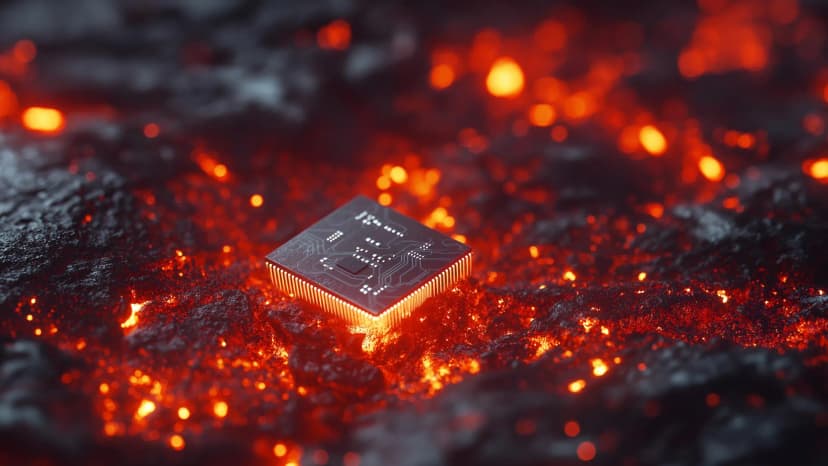
A new type of memory device, a memristor, has been unveiled that can operate at an unprecedented 700 degrees Celsius, a significant advancement beyond the typical 200 degrees Celsius limit of modern electronics. Published on March 26, 2026, in Science, this research from the University of Southern California demonstrates a memristor that shows no signs of failure at temperatures exceeding molten lava.
The device is constructed with tungsten electrodes and a hafnium oxide ceramic layer, crucially incorporating graphene. This structure prevents the atomic migration that typically causes conventional electronics to fail at high temperatures. The memristor successfully retained data for over 50 hours at 700°C and withstood billions of switching cycles.
This development opens doors for applications in extreme environments, including space exploration missions to planets like Venus and deep geothermal energy systems. Furthermore, its unique properties, particularly its efficiency in matrix multiplication, offer substantial advantages for artificial intelligence computations, promising faster and more energy-efficient AI systems.
While practical implementation still requires further development of integrated logic circuits and scaled manufacturing, the foundational component has been created. The use of existing materials like tungsten and hafnium oxide, alongside advancements in graphene production, suggests a viable path toward commercialization.
