Home / Sports / Texas Tech Defense Faces High-Powered Sam Houston Air Attack
Texas Tech Defense Faces High-Powered Sam Houston Air Attack
23 Sep
Summary
- Sam Houston's offense averages 454.3 yards, with 345.7 passing yards.
- Quarterback Landyn Locke has thrown for 973 yards and nine touchdowns.
- Texas Tech's secondary must cover proven threats like Chris Reed.
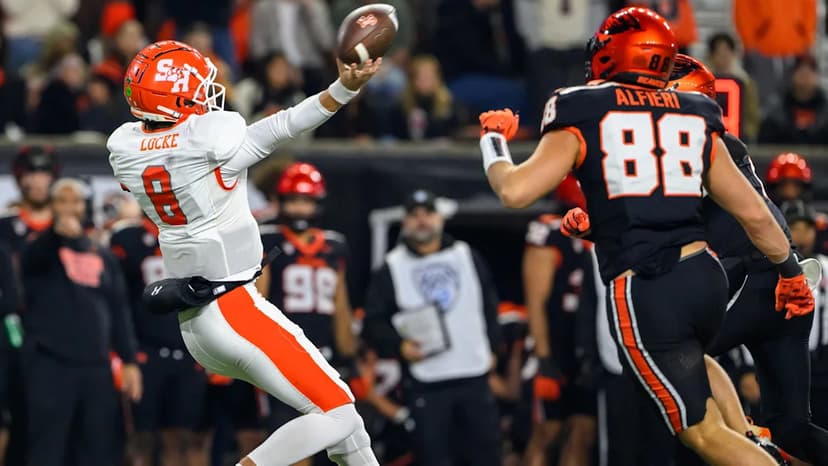
Texas Tech enters Saturday's game as the favorite against Sam Houston, but the Red Raiders' defense cannot underestimate the Bearkats' potent offense.
Sam Houston enters the contest with a 1-2 record, yet their offense has been a yardage machine, averaging 454.3 total yards per game. A striking 345.7 of those yards have come through the air, highlighting their aerial attack.
At the helm of this offense is quarterback Landyn Locke, a 6-4 sophomore who has rapidly established himself. Through three games, Locke has thrown for 973 yards and nine touchdowns against just one interception, completing 67.6 percent of his passes.
Locke's performance against Nicholls was particularly dominant. He registered 322 passing yards and four touchdowns in a decisive 59-0 victory, marking his third consecutive game with over 300 passing yards.
Texas Tech's secondary faces a challenging task with Sam Houston's array of receiving talent. Senior Chris Reed remains a primary weapon, having accumulated 462 receiving yards and five touchdowns last season, and already adding 204 receiving yards this year.
Kamari Maxwell, an Austin Peay transfer, has also demonstrated big-play capability. He led the team with 86 receiving yards and scored a 48-yard touchdown reception against Nicholls last week. Last season, Maxwell recorded 385 yards and four touchdowns.
Another vertical threat for the Bearkats is Tim Burns Jr., who opened last week's scoring with a 65-yard touchdown reception. This underscores the importance for Texas Tech safeties to remain disciplined and avoid being drawn into the backfield.
While Sam Houston's ground game is less productive, Jerrian Parker Jr. showed flashes against Nicholls, rushing for 52 yards on six carries. However, the Bearkats' strategy focuses on Locke distributing the ball to receivers for explosive plays, rather than sustained ground attacks.
For Texas Tech, the defensive priority is clear: apply pressure to Locke, eliminate deep passing opportunities, and force Sam Houston to establish a consistent run game. Success in these areas should align with the Red Raiders' strengths and lead to a favorable outcome.


