Home / Science / Fungi Build World's First Mycelium Home
Fungi Build World's First Mycelium Home
26 Mar
Summary
- A home in Namibia is the world's first built using mycelium.
- Mycelium walls are grown on invasive bush pulp, creating insulation.
- This bio-manufacturing approach could offer climate crisis solutions.
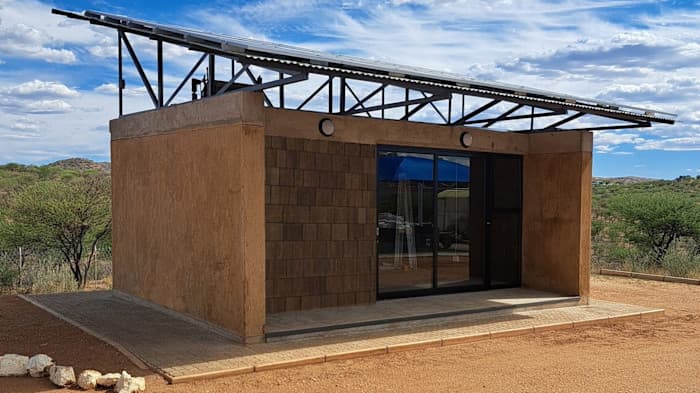
In rural Namibia, the world's first home constructed from mycelium has been completed, marking a significant advancement in sustainable building. The single-storey dwelling features walls made from mycelium, the root-like structure of fungi. This material was cultivated on wood pulp derived from an invasive local bush.
The mycelium was grown in molds and then heated, transforming it into lightweight, insulating, and compostable building blocks. This novel process not only provided the structure for the home but also generated 3 tonnes of edible mushrooms for the local community. Architects believe this bio-manufacturing technique, termed mycotecture, could offer solutions to the climate crisis, given the construction sector's substantial contribution to global emissions.
Companies like Ecovative have been instrumental in developing mycelium production at scale since 2007. While their initial focus was on insulation for building panels, they have since diversified into alternative leather and food products. Ecovative's process involves growing mycelium on substrates like wood chips for several days before baking it to ensure inertness.
Architects are exploring mycelium's potential for structural applications, developing building blocks as alternatives to cross-laminated timber. Projects like the Hy-Fi installation at MoMA PS1 in 2014 showcased mycelium bricks' viability, with the structure later being composted. Start-ups like Mykor are now producing mycelium interior partition panels.
Despite its promise, challenges remain, including regulatory hurdles, cost-effectiveness at scale, and public perception of using organic materials. However, ongoing research aims to enhance mycelium's strength, durability, and form, paving the way for more sustainable construction.