feedzop-word-mark-logo
searchLogin
Feedzop
homeFor YouUnited StatesUnited States
You
bookmarksYour BookmarkshashtagYour Topics
Trending
Terms of UsePrivacy PolicyAboutJobsPartner With Us

© 2026 Advergame Technologies Pvt. Ltd. ("ATPL"). Gamezop ® & Quizzop ® are registered trademarks of ATPL.

Gamezop is a plug-and-play gaming platform that any app or website can integrate to bring casual gaming for its users. Gamezop also operates Quizzop, a quizzing platform, that digital products can add as a trivia section.

Over 5,000 products from more than 70 countries have integrated Gamezop and Quizzop. These include Amazon, Samsung Internet, Snap, Tata Play, AccuWeather, Paytm, Gulf News, and Branch.

Games and trivia increase user engagement significantly within all kinds of apps and websites, besides opening a new stream of advertising revenue. Gamezop and Quizzop take 30 minutes to integrate and can be used for free: both by the products integrating them and end users

Increase ad revenue and engagement on your app / website with games, quizzes, astrology, and cricket content. Visit: business.gamezop.com

Property Code: 5571

Home / Science / Ancient Wolf Cub's Meal Reveals Rhino Extinction Secrets

Ancient Wolf Cub's Meal Reveals Rhino Extinction Secrets

14 Jan

•

Summary

  • Woolly rhino genome decoded from ancient wolf cub's stomach contents.
  • Rhino population remained large and stable before a rapid extinction.
  • Warming climate, not hunting, likely caused the woolly rhino's demise.
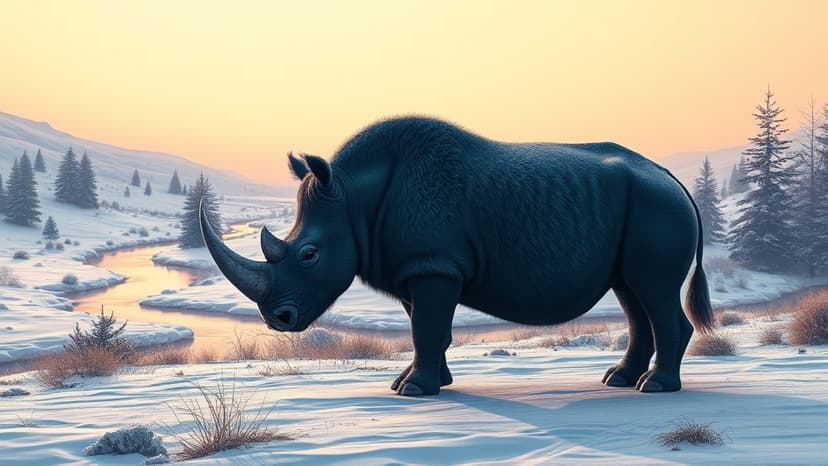
Ancient Wolf Cub's Meal Reveals Rhino Extinction Secrets

Researchers have unlocked secrets of the woolly rhinoceros's extinction by analyzing its DNA found within a 14,400-year-old mummified wolf cub discovered in Siberia. The remarkably preserved remains allowed scientists to decode the rhino's genome from its last meal, offering unprecedented insight into the species' final centuries.

The analysis revealed that the woolly rhino population was larger and more stable than previously assumed. Researchers found no evidence of "genomic erosion," which typically occurs in declining species. This suggests that the extinction was not a slow decline but a comparatively rapid event, likely occurring over 300 to 400 years.

Further study indicates that a significant climate shift, the Bølling-Allerød Interstadial, approximately 14,700 to 12,900 years ago, transformed the landscape. This abrupt warming period is now considered the most probable cause of the woolly rhinoceros's extinction, rather than human hunting, as the species' population remained viable for millennia after humans arrived in the region.

trending

JPMorgan Chase earnings beat

trending

Patriots defeat Chargers 16-3

trending

Leafs beat Avalanche in OT

trending

Anthropic launches Claude for Healthcare

trending

Clippers beat Hornets

trending

Red Wings honor Fedorov

trending

Kings beat Los Angeles Lakers

trending

Emma Raducanu Hobart debut

Disclaimer: This story has been auto-aggregated and auto-summarised by a computer program. This story has not been edited or created by the Feedzop team.
Scientists decoded the woolly rhino's genome from meat found in the stomach of a 14,400-year-old wolf cub discovered in Siberian permafrost.
The extinction was likely caused by an abrupt warming period during the last ice age, known as the Bølling-Allerød Interstadial, not human hunting.
The wolf cub's meal showed the rhino population was large and stable before a rapid extinction, challenging previous theories of gradual decline.

Read more news on

Scienceside-arrow

You may also like

Kurukshetra: Winter Haven for 50+ Migratory Bird Species

5 Jan • 53 reads

article image

Norway Photo Sparks AI Debate: Too Good to Be True?

13 Dec, 2025 • 72 reads

article image

Northern Ireland's Hidden Gems: Farms, Books & Soundscapes

9 Dec, 2025 • 161 reads

article image

Sami Reindeer Herders Blend Tech and Tradition

6 Dec, 2025 • 148 reads

article image

Melting Ice Unearths 1,500-Year-Old Norwegian Reindeer Trap

3 Dec, 2025 • 149 reads

article image