

Home / Science / Pirate treasure debunks ancient gold scam claims
Pirate treasure debunks ancient gold scam claims
15 Apr
Summary
- Whydah Gally shipwreck artifacts challenge historical gold adulteration claims.
- Analysis reveals West African gold artifacts are mostly pure, not mixed.
- Ancient European suspicions of deceitful traders are now deemed unfounded.
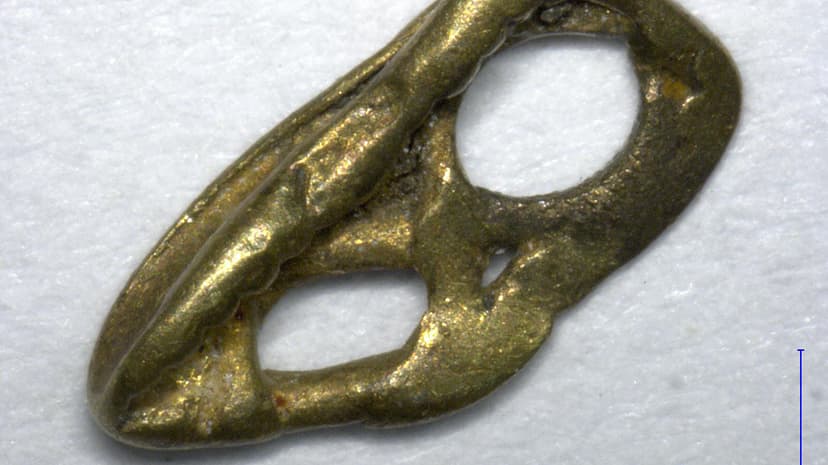
Historical accounts from European traders in West Africa during the age of exploration frequently expressed suspicion of their trading partners, believing gold was intentionally mixed with lesser metals. However, recent scientific analysis of artifacts recovered from the 1717 Whydah Gally shipwreck is challenging these long-standing assertions. The ship, captained by pirate Samuel Bellamy, sank off the coast of Massachusetts, and its recovered treasures included gold artifacts attributed to the Akan people of West Africa.
A study published in March in Heritage Science, conducted by geochemist Tobias Skowronek and archaeologists Christopher DeCorse and Brandon Clifford, examined 27 gold artifacts from the Whydah. Using electron beam analysis, the researchers determined that these artifacts ranged from 70 to 100 percent gold by weight. When impurities were present, they consisted of metals like silver, copper, iron, and lead. This composition aligns with the natural makeup of gold ore found in Ghana's Ashanti Gold Belt, the presumed origin of these artifacts.
These findings suggest that the notion of West African traders systematically cheating Europeans by adulterating gold is unfounded. While some impurities might have existed, they were likely due to natural ore composition or shared processing equipment rather than intentional deceit. The scientific examination of the Whydah's treasure is thus providing a new understanding of historical gold trade dynamics.

