
Home / Science / Why Planes Avoid Antarctica's Vast Skies
Why Planes Avoid Antarctica's Vast Skies
5 May
Summary
- Commercial flights avoid Antarctica due to low demand and efficiency.
- Great circle routes favor the Arctic for Northern Hemisphere travel.
- Extreme weather and lack of emergency landing sites deter flights.
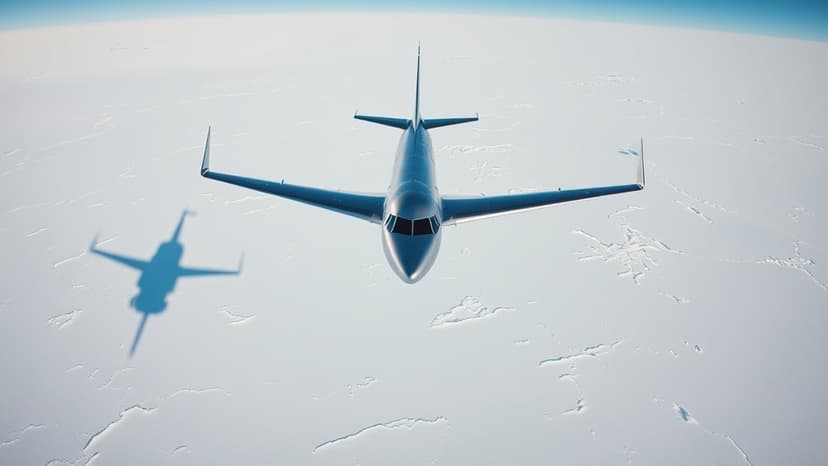
Commercial aviation largely bypasses Antarctica due to a confluence of geographical and economic factors, rather than any formal restrictions. The planet's busiest flight paths connect major Northern Hemisphere cities, with great circle routes naturally arc over the Arctic, offering efficiency. Conversely, flight paths between Southern Hemisphere cities typically do not require traversing Antarctica, with Southern Ocean routes proving more practical.
The continent's sparse population and lack of commercial activity mean there is minimal demand for flights over its territory. This contrasts sharply with the Arctic, which serves as a vital corridor for intercontinental travel. Furthermore, strict aviation safety regulations, such as ETOPS, require aircraft to remain within a certain distance of emergency landing sites. Antarctica offers very few suitable landing options, and its extreme weather conditions, including temperatures below -60 degrees Celsius, violent winds, and periods of total darkness, present significant safety challenges.
Despite these deterrents, Antarctica is not entirely inaccessible by air. Specialized sightseeing tours and scientific expeditions do operate, utilizing specialized aircraft. Some commercial flights may skirt Antarctic airspace, but direct transit over the continent remains exceptionally rare, primarily because it remains an impractical and economically unviable route for routine passenger or cargo transport.
