Home / Science / Venus Ate Its Moon? Astrophysicists Unveil Theory
Venus Ate Its Moon? Astrophysicists Unveil Theory
15 Sep
Summary
- Venus may have lost its moon due to slow rotation and consumption.
- Earth's rapid spin pushes its moon away, unlike Venus.
- New NASA missions will explore Venus in the late 2020s/early 2030s.
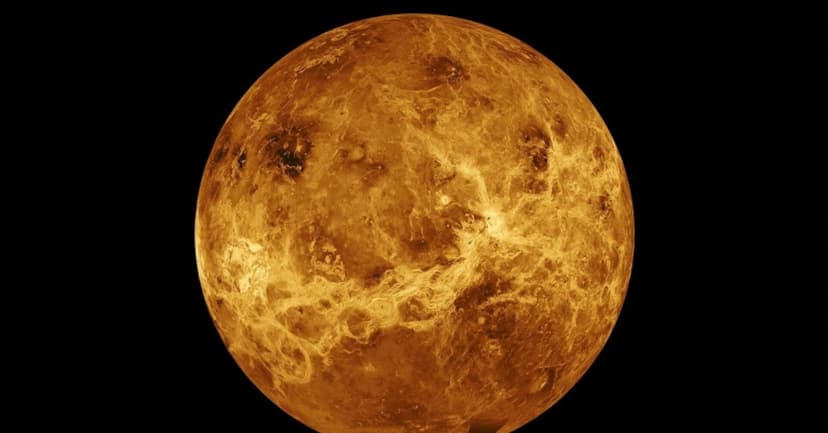
Astrophysicists have proposed a new theory for why Venus, a planet similar to Earth in size, lacks its own moon. This "celestial cannibalism" hypothesis suggests that Venus's extremely slow rotation would have caused any natural satellite to gradually spiral inward and eventually collide with the planet. This event likely occurred within the first billion years of Venus's history.
In contrast, Earth's rapid rotation of 24 hours is actively pushing its moon away at about 4 centimeters per year. Previous theories suggested Venus never had a moon or lost it to an impact. However, the new study emphasizes the critical role of a planet's rotational speed in retaining a moon. Future NASA missions, DAVINCI+ and VERITAS, are slated for launch in the late 2020s or early 2030s to further investigate Venus.


