feedzop-word-mark-logo
searchLogin
Feedzop
homeFor YouUnited StatesUnited States
You
bookmarksYour BookmarkshashtagYour Topics
Trending
Terms of UsePrivacy PolicyAboutJobsPartner With Us

© 2026 Advergame Technologies Pvt. Ltd. ("ATPL"). Gamezop ® & Quizzop ® are registered trademarks of ATPL.

Gamezop is a plug-and-play gaming platform that any app or website can integrate to bring casual gaming for its users. Gamezop also operates Quizzop, a quizzing platform, that digital products can add as a trivia section.

Over 5,000 products from more than 70 countries have integrated Gamezop and Quizzop. These include Amazon, Samsung Internet, Snap, Tata Play, AccuWeather, Paytm, Gulf News, and Branch.

Games and trivia increase user engagement significantly within all kinds of apps and websites, besides opening a new stream of advertising revenue. Gamezop and Quizzop take 30 minutes to integrate and can be used for free: both by the products integrating them and end users

Increase ad revenue and engagement on your app / website with games, quizzes, astrology, and cricket content. Visit: business.gamezop.com

Property Code: 5571

Home / Science / India-born scientist's CFC discovery reshaped climate science

India-born scientist's CFC discovery reshaped climate science

29 Jan

Summary

  • CFCs were found to trap heat more potently than carbon dioxide.
  • His 1975 research on CFCs was initially met with disbelief.
  • His work led to the Montreal Protocol banning CFC production.
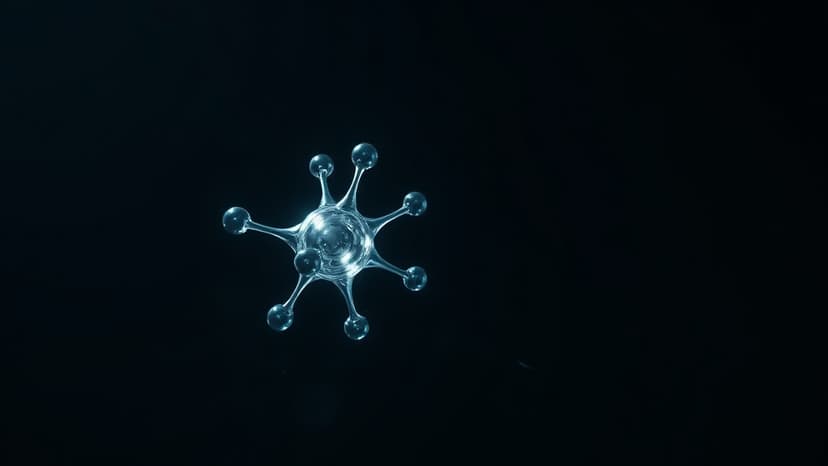
India-born scientist's CFC discovery reshaped climate science

Growing up in India, Veerabhadran Ramanathan's scientific journey led him to discover the significant greenhouse effect of chlorofluorocarbons (CFCs). While working at NASA in the 1970s, Ramanathan conducted clandestine research revealing that CFCs, then common in refrigerants and aerosols, were potent heat-trapping gases, potentially thousands of times more impactful than carbon dioxide. His findings, published in 1975, challenged prevailing scientific thought and were initially met with skepticism.

Ramanathan's persistent research established that greenhouse gases beyond CO2 significantly contribute to global warming. This knowledge was instrumental in the development of the first effective climate mitigation policy. In 1987, the Montreal Protocol eventually banned CFCs, largely due to growing public concern over ozone depletion, preventing substantial additional warming.

His career, marked by interdisciplinary insights, also explored the cooling effect of clouds and the amplification of warming by water vapor. Ramanathan's work on atmospheric brown clouds over the Indian subcontinent revealed complex interactions between air pollution and climate change. He has been recognized with the prestigious Crafoord Prize for expanding humanity's understanding of atmospheric composition and its impact on climate and air quality.

Disclaimer: This story has been auto-aggregated and auto-summarised by a computer program. This story has not been edited or created by the Feedzop team.
Veerabhadran Ramanathan discovered that CFCs were potent heat-trapping gases, with one molecule having a warming effect up to 10,000 times that of carbon dioxide.
His research established that greenhouse gases other than CO2 significantly contribute to global warming, which underpinned the first successful climate mitigation policy, the Montreal Protocol banning CFCs.
Ramanathan also showed that clouds have a cooling effect, water vapor amplifies CO2 warming, and studied atmospheric brown clouds, revealing complex pollution dynamics.

Read more news on

Scienceside-arrowNASAside-arrow
•
trending

Ohio snow emergency declared

trending

TikTok down in United States

trending

Andreeva matches Venus Williams' feat

trending

Warrington Hospital baby death

trending

Alexander Zverev advances in Australia

trending

Oilers host Capitals

trending

London celebrates Chinese New Year

trending

Liza Minnelli defends AI use

You may also like

Breathe Easy? Deadly Air Pollutants Exceed Guidelines Worldwide

27 Jan • 11 reads

article image

Kolkata's Air: Toxic Gases Now Trump PM Pollution

19 Jan • 54 reads

article image

Renewables' Miracle: Sun and Wind Power Humanity's Future

8 Jan • 157 reads

article image

Australia's Forests Dying Faster as Climate Warms

6 Jan • 141 reads

article image

Yorkshire reservoirs surge, ending long drought

2 Jan • 137 reads

article image