

Home / Science / US Birthrate Dip: Temporary Lull or Baby Bust?
US Birthrate Dip: Temporary Lull or Baby Bust?
10 Apr
Summary
- US birthrate decline may be a temporary postponement, not a permanent baby bust.
- Women are increasingly delaying childbirth until their 30s and 40s.
- Teen pregnancy decline accounts for a significant portion of fertility drops.
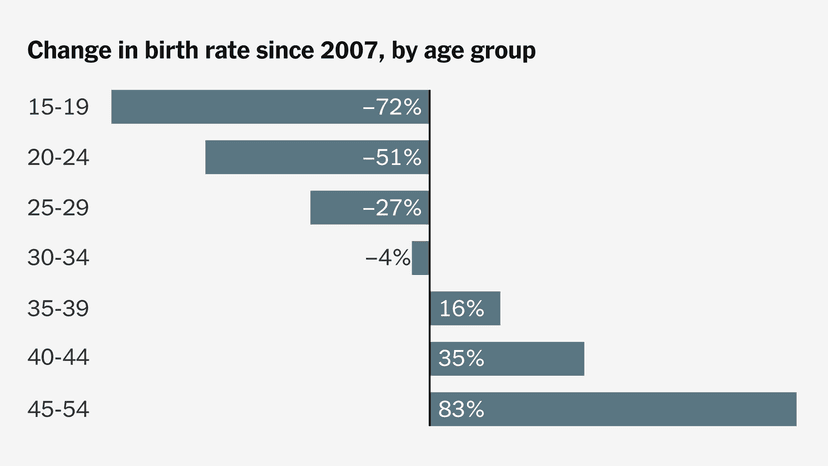
Current U.S. federal data reveals a record-low birthrate, leading some to anticipate a prolonged "baby bust." However, demographers propose this may be a temporary "postponement transition," where young women are delaying pregnancies.
This trend sees women of childbearing age increasingly opting to have children in their 30s and 40s, rather than their teens or 20s. Historically, similar patterns in Europe and the U.S. during the 1970s saw fertility rebound as delayed pregnancies were eventually realized.
A significant factor contributing to the decline is the substantial drop in teen pregnancies, which fell 72% since the Great Recession. This decrease accounts for nearly a third of recent fertility declines nationwide.
While the postponement of childbirth can signify greater autonomy and investment in education and careers, it also reflects anxieties about financial instability and future uncertainty. The delay is more pronounced among unmarried women and those with lower incomes or less education.
Despite the current low rates, surveys suggest most young women still desire children. The central question remains whether these women will eventually have children, potentially leading to a partial rebound, though a full return to earlier fertility levels is considered unlikely.
