Home / Science / Ötzi's Mummy Hosts Ancient & Modern Microbes
Ötzi's Mummy Hosts Ancient & Modern Microbes
3 Jun
Summary
- Ötzi's mummy is a dynamic ecosystem with three distinct microbial worlds.
- Ancient gut bacteria offer a window into Copper Age human diets.
- Cold-adapted yeasts are actively growing on the 5,300-year-old mummy.
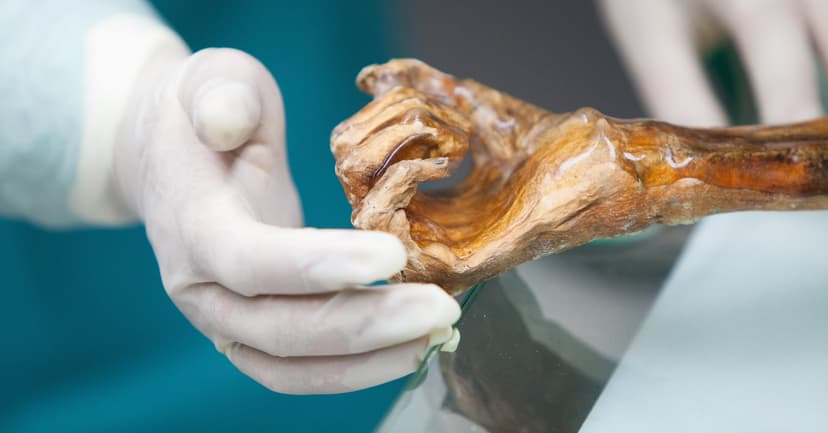
Ötzi the Iceman, who died around 5,300 years ago in the Alps, is proving to be a living biological interface. Recent comprehensive analysis of his mummy has identified three distinct microbial ecosystems within and on his body. These encompass ancient gut bacteria from his lifetime, cold-adapted organisms from his glacial environment, and modern microbes introduced during his decades of museum preservation.
The ancient gut bacteria offer a rare glimpse into the pre-industrial intestinal microbiome, predating processed foods and antibiotics. Researchers are investigating whether these ancient cells retain metabolic activity, though their DNA shows significant degradation over millennia. This preserved gut flora provides a baseline for understanding shifts in human health.
Conservation science faces new questions as cold-loving yeasts are found to be actively growing on Ötzi, who is stored at 21 degrees Fahrenheit (-6 degrees Celsius). Modern conservation practices, such as the use of spray water, have also introduced dominant bacterial signatures, reshaping the mummy's external microbiome in previously unrecognized ways.


