feedzop-word-mark-logo
searchLogin
Feedzop
homeFor YouUnited StatesUnited States
You
bookmarksYour BookmarkshashtagYour Topics
Trending
trending

Jaguars overwhelm Jets 48-20

trending

Trevor Lawrence shines, 5 TDs

trending

Affleck, Damon crime thriller

trending

Eagles score first touchdown

trending

NFL playoff picture Week 15

trending

NHL threatens 2026 Olympics

trending

Nick Reiner killed his parents

trending

Cowboys' playoff chances plummet

trending

Snow causes school delays

Terms of UsePrivacy PolicyAboutJobsPartner With Us

© 2025 Advergame Technologies Pvt. Ltd. ("ATPL"). Gamezop ® & Quizzop ® are registered trademarks of ATPL.

Gamezop is a plug-and-play gaming platform that any app or website can integrate to bring casual gaming for its users. Gamezop also operates Quizzop, a quizzing platform, that digital products can add as a trivia section.

Over 5,000 products from more than 70 countries have integrated Gamezop and Quizzop. These include Amazon, Samsung Internet, Snap, Tata Play, AccuWeather, Paytm, Gulf News, and Branch.

Games and trivia increase user engagement significantly within all kinds of apps and websites, besides opening a new stream of advertising revenue. Gamezop and Quizzop take 30 minutes to integrate and can be used for free: both by the products integrating them and end users

Increase ad revenue and engagement on your app / website with games, quizzes, astrology, and cricket content. Visit: business.gamezop.com

Property Code: 5571

Home / Science / Maps Lie: How Cartography Shapes Our Reality

Maps Lie: How Cartography Shapes Our Reality

14 Dec

•

Summary

  • Traditional maps present a deceptive, tidy view of the world.
  • Cartography needs to embrace uncertainty, subjectivity, and multiplicity.
  • Countermapping empowers marginalized groups to be seen by authorities.
Maps Lie: How Cartography Shapes Our Reality

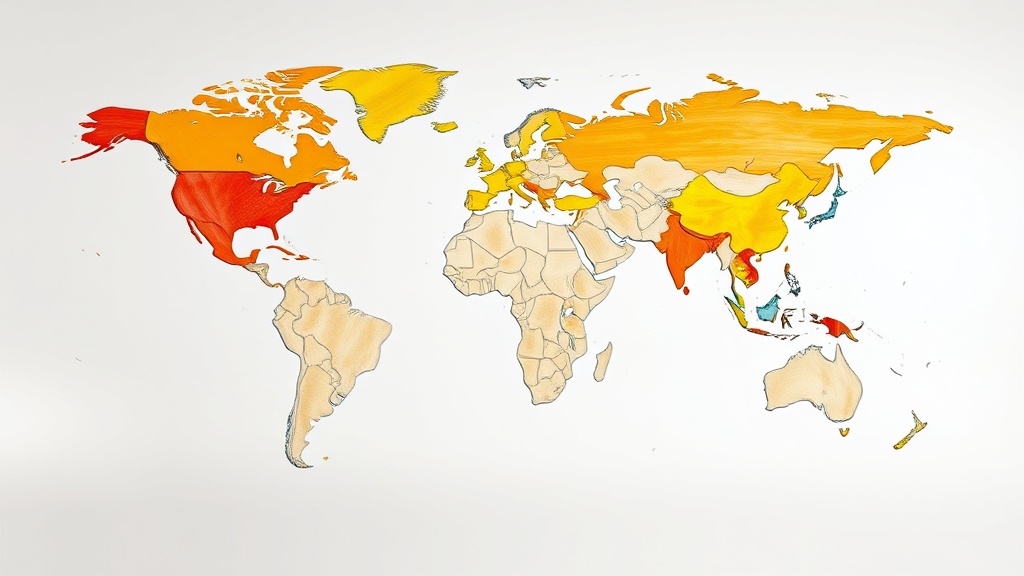
The way we visualize the world through maps is being challenged, as new knowledge demands more nuanced representations. Traditional maps, originating from 18th-century educational aids, present a simplified, often misleading, view of countries and global data. This approach is criticized for causing significant damage to our understanding of complex realities and inequalities.

A growing movement advocates for a "mapping revolution," seeking to replace state-centric views with an emphasis on mobility and human connections. This new cartography aims to embrace uncertainty, subjectivity, and multiplicity, acknowledging that data collection and visualization are inherently human and interpretive processes.

This shift is also empowering marginalized communities. "Countermapping" initiatives, where groups create their own maps, have been instrumental in challenging official narratives and highlighting overlooked populations. Such efforts demonstrate the evolving role of maps in reflecting a more complex and interconnected world.


Disclaimer: This story has been auto-aggregated and auto-summarised by a computer program. This story has not been edited or created by the Feedzop team.
Traditional maps, stemming from 18th-century educational tools, present a deceptively tidy and objective view that oversimplifies complex realities and inequalities.
Van Houtum calls to replace state-centric map views with a focus on mobility and human connections, emphasizing dynamism over fixed borders.
Countermapping allows marginalized groups, like pavement dwellers in Mumbai, to create their own spatial representations to be seen by those in power and challenge official narratives.

Read more news on

Scienceside-arrow

You may also like

Russia Tests Drone Nav: 15cm Accuracy!

8 hours ago • 2 reads

article image

Gemini Now Shows Photos for Local Finds

2 hours ago

article image

Yamuna Faces Ecological Collapse: Urgent Action Needed

13 Dec • 5 reads

article image

Google Maps: Never Lose Your Car Again!

12 Dec • 8 reads

article image

Same Trip, New Comfort: Travelers Embrace Familiar Getaways

5 Dec • 27 reads

article image