

Home / Science / Tiny Robots Hunt Nanoplastics in Water
Tiny Robots Hunt Nanoplastics in Water
29 Apr
Summary
- Magnetic nanobots actively seek and capture nanoplastics from water.
- Electrostatic attraction aids nanobots in latching onto plastic particles.
- Robots' effectiveness decreases in saltwater and groundwater conditions.
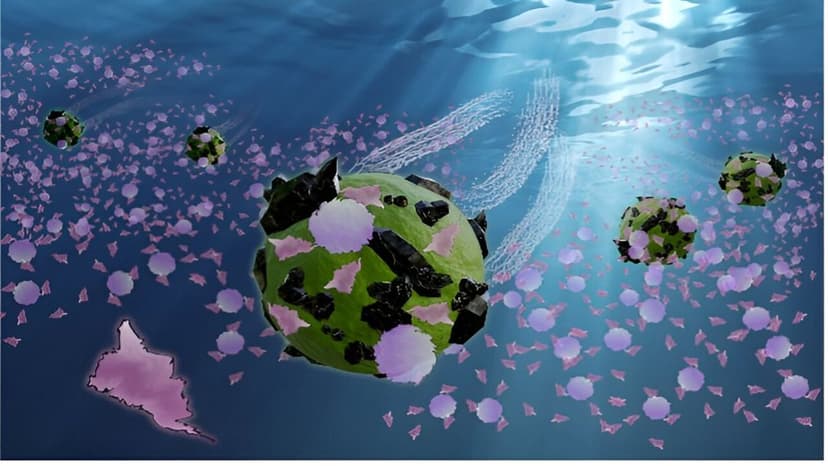
Tiny magnetic robots have been engineered to actively seek and eliminate nanoplastics from water sources. Developed at the Brno University of Technology, these nanobots employ electrostatic attraction, similar to static cling, to capture plastic particles. Their movement is precisely controlled by external magnetic fields, eliminating the need for fuel or light.
In laboratory tests, these active nanobots demonstrated a higher capture rate of nanoplastics compared to passive methods. However, challenges remain for real-world implementation. The robots degrade over time and their efficiency is notably reduced in simulated seawater and groundwater, where dissolved ions interfere with their electrostatic capture mechanism. Furthermore, their slow operational speed presents a scalability issue for processing large volumes of water.
