feedzop-word-mark-logo
searchLogin
Feedzop
homeFor YouUnited StatesUnited States
You
bookmarksYour BookmarkshashtagYour Topics
Trending
Terms of UsePrivacy PolicyAboutJobsPartner With Us

© 2026 Advergame Technologies Pvt. Ltd. ("ATPL"). Gamezop ® & Quizzop ® are registered trademarks of ATPL.

Gamezop is a plug-and-play gaming platform that any app or website can integrate to bring casual gaming for its users. Gamezop also operates Quizzop, a quizzing platform, that digital products can add as a trivia section.

Over 5,000 products from more than 70 countries have integrated Gamezop and Quizzop. These include Amazon, Samsung Internet, Snap, Tata Play, AccuWeather, Paytm, Gulf News, and Branch.

Games and trivia increase user engagement significantly within all kinds of apps and websites, besides opening a new stream of advertising revenue. Gamezop and Quizzop take 30 minutes to integrate and can be used for free: both by the products integrating them and end users

Increase ad revenue and engagement on your app / website with games, quizzes, astrology, and cricket content. Visit: business.gamezop.com

Property Code: 5571

trending

Bitcoin price struggles amid fragility

trending

Buddha relics travel from Vadodara

trending

Mrunal Thakur wedding rumours

trending

Suzlon Energy Q3 results up

trending

Savannah Guthrie pleads for mother

trending

Lizelle Lee in WPL Final

trending

Australia vs Netherlands warm-up

trending

RCB wins WPL match

trending

Bas de Leede admires Pandya

Home / Science / Quantum Clocks and Black Holes Reveal Time's True Nature

Quantum Clocks and Black Holes Reveal Time's True Nature

26 Jan

•

Summary

  • Time's flow may be an emergent illusion from a timeless universe.
  • Quantum mechanics and entanglement offer new ways to test time's nature.
  • Black holes might serve as the universe's fundamental quantum clock.

Quantum Clocks and Black Holes Reveal Time's True Nature

The fundamental nature of time, a concept deeply embedded in our daily lives, remains a profound mystery in physics. Current theories, from Einstein's relativity to quantum mechanics, offer incomplete explanations for why time flows in one direction. A compelling hypothesis from the 1980s, the Page-Wootters mechanism, posits that time is an emergent illusion from an essentially timeless universe, orchestrated by quantum mechanics.

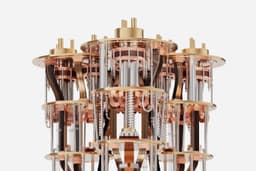
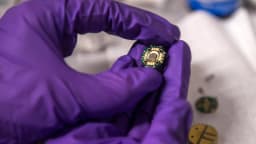
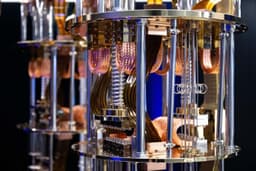
Recent advancements in quantum technology are now making this theory experimentally accessible. Researchers are developing sophisticated quantum clocks that treat timekeeping as a process requiring energy and producing heat, akin to engines. These efforts aim to understand the fundamental limits and properties of clocks, thereby probing the nature of time itself.

Further pushing the boundaries, scientists are exploring black holes as potential universal quantum clocks. Their unique properties, including entanglement with their surroundings, suggest they could serve as the 'clock' component in the Page-Wootters model. This interdisciplinary approach, merging quantum physics, thermodynamics, and cosmology, seeks to unravel the deepest secrets of temporal existence.


Disclaimer: This story has been auto-aggregated and auto-summarised by a computer program. This story has not been edited or created by the Feedzop team.
The Page-Wootters mechanism suggests that time is an illusion emerging from a timeless universe, orchestrated by quantum mechanics and entanglement.
Quantum clocks, viewed as engines that require work and produce heat, allow scientists to probe the fundamental limits and properties of timekeeping, offering insights into time's nature.
Researchers propose that black holes, due to their entanglement and isolation, might function as the 'clock' component in theories explaining time's emergent nature.

Read more news on

Scienceside-arrow

You may also like

Quantum Battery Powers Up Quantum Computer

6 hours ago • 2 reads

article image

New Time Crystal Shatters Complexity Records

28 Jan • 35 reads

article image

Quantum Tech: The Next Transistor Moment?

27 Jan • 34 reads

article image

Physics Breakthrough: Two Worlds Collide

21 Jan • 63 reads

article image

Quantum Leap: Neural Nets Break Heisenberg's Limit

9 Jan • 114 reads

article image