Home / Science / Rare T. Rex Skeleton 'Gus' Fetches Millions Amid Controversy
Rare T. Rex Skeleton 'Gus' Fetches Millions Amid Controversy
13 Jul
Summary
- A T. rex skeleton named Gus sold for millions at Sotheby's.
- The sale of Gus sparks debate over private fossil ownership.
- Scientists argue private sales remove fossils from public study.
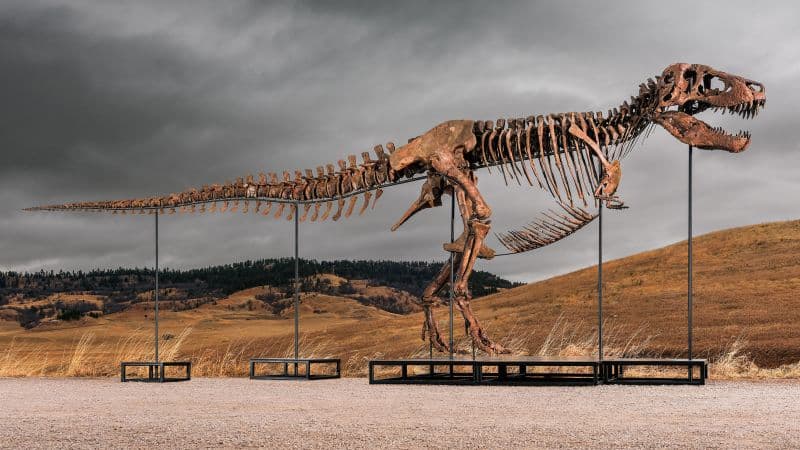
A nearly complete Tyrannosaurus rex skeleton, dubbed 'Gus,' was auctioned at Sotheby's in New York City. Discovered on the 6,500-acre Licking ranch in Harding County, South Dakota, the fossil is one of the largest T. rexes ever found, measuring 38 feet long. Its sale is anticipated to set a new record for a fossil auction.
The discovery occurred on land within the famed Hell Creek Formation, a region known for yielding significant T. rex fossils, including 'Stan,' which previously sold for $31.8 million. The excavation of Gus was completed by commercial paleontologists after the rancher's passing.
However, the auction of 'Gus' is highly controversial. Paleontologists and organizations like the Society of Vertebrate Paleontology (SVP) strongly oppose the sale of scientifically significant fossils into private hands. They argue that such sales can lead to specimens disappearing from public access and scientific study.
Experts like Professor Stuart Sumida emphasize that privately owned fossils are often unavailable for formal research, hindering scientific progress. While Sotheby's acknowledges that no formal scientific study is possible on Gus, they argue that commercial excavation and sale are necessary to fund such discoveries, as museums often lack the resources for these expeditions.


