
Home / Science / Iceland's Protected Isle: A Living Lab
Iceland's Protected Isle: A Living Lab
5 Jun
Summary
- An underwater volcanic eruption created Iceland's Surtsey Island in 1963.
- Strictly protected, the island allows observation of life's initial colonization.
- Surtsey is a unique natural laboratory for studying ecosystem development.
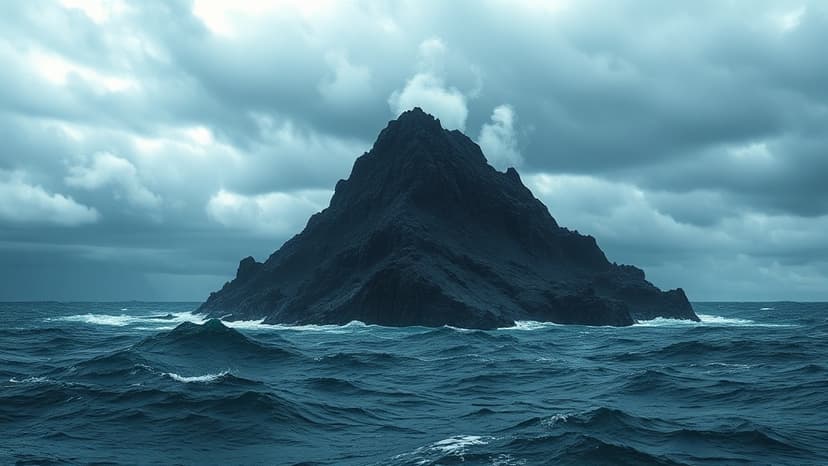
In November 1963, fishermen off Iceland's southern coast witnessed the dramatic emergence of Surtsey Island from the North Atlantic following a powerful underwater volcanic eruption. This newly formed landmass, named after a Norse fire giant, became the subject of a unique conservation effort. Iceland's decision to severely restrict human access has preserved the island as an invaluable scientific research site.
Protected from nearly all interference, Surtsey offers a rare, observable timeline of ecosystem development. Initially a barren landscape of volcanic rock and ash, it has gradually been colonized by life. Microscopic organisms arrived first, followed by seeds transported by wind and waves. Over time, vegetation established, seabirds nested, and insects arrived, creating a functioning ecosystem.
Designated a UNESCO World Heritage Site in 2008, Surtsey serves as an outstanding natural laboratory. Scientists study colonization processes and ecological succession, gaining insights into how life establishes itself on new land. The island provides a modern parallel to early life's evolution on Earth, offering a dynamic experiment that continues to unfold.
