Home / Science / Stonehenge Mystery Solved: Ice Didn't Move Rocks!
Stonehenge Mystery Solved: Ice Didn't Move Rocks!
23 Jan
Summary
- New findings confirm humans, not glaciers, moved Stonehenge's massive rocks.
- Mineral grain analysis ruled out glacial transport from Scotland or Wales.
- The method of human transport and the reason for Stonehenge's construction remain unknown.

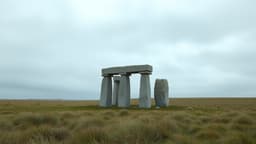
New scientific findings have definitively resolved a centuries-old debate about how Stonehenge's massive stones were transported. For generations, theories ranged from mythological explanations to the plausible idea of glacial movement. However, recent analysis of mineral grains, described as "geological time capsules," has disproven the glacial theory.
Researchers studied river sands near the historic site, using a "fingerprinting" technique to trace sediment movement across Britain over millions of years. The absence of specific mineral signatures associated with glacial activity near Stonehenge indicates that ice played no role in their placement. This evidence strongly supports the long-held belief that ancient humans were the architects of Stonehenge's colossal rock assembly.
While the mystery of how humans managed this monumental task without modern technology persists, as does the question of Stonehenge's original purpose, this research provides a crucial piece of the puzzle. The findings, published in Communications Earth and Environment, contribute to a broader understanding of this iconic monument, which may have served various functions such as a calendar, temple, or feasting site.