feedzop-word-mark-logo
searchLogin
Feedzop
homeFor YouUnited StatesUnited States
You
bookmarksYour BookmarkshashtagYour Topics
Trending
Terms of UsePrivacy PolicyAboutJobsPartner With Us

© 2026 Advergame Technologies Pvt. Ltd. ("ATPL"). Gamezop ® & Quizzop ® are registered trademarks of ATPL.

Gamezop is a plug-and-play gaming platform that any app or website can integrate to bring casual gaming for its users. Gamezop also operates Quizzop, a quizzing platform, that digital products can add as a trivia section.

Over 5,000 products from more than 70 countries have integrated Gamezop and Quizzop. These include Amazon, Samsung Internet, Snap, Tata Play, AccuWeather, Paytm, Gulf News, and Branch.

Games and trivia increase user engagement significantly within all kinds of apps and websites, besides opening a new stream of advertising revenue. Gamezop and Quizzop take 30 minutes to integrate and can be used for free: both by the products integrating them and end users

Increase ad revenue and engagement on your app / website with games, quizzes, astrology, and cricket content. Visit: business.gamezop.com

Property Code: 5571

Home / Science / Tiny Sand Grains Reveal Stonehenge Secret

Tiny Sand Grains Reveal Stonehenge Secret

22 Jan

•

Summary

  • Mineral fingerprinting proves glaciers didn't transport Stonehenge stones.
  • Sand analysis shows no glacial material reached Salisbury Plain.
  • Neolithic people likely moved stones using sledges and rivers.
Tiny Sand Grains Reveal Stonehenge Secret

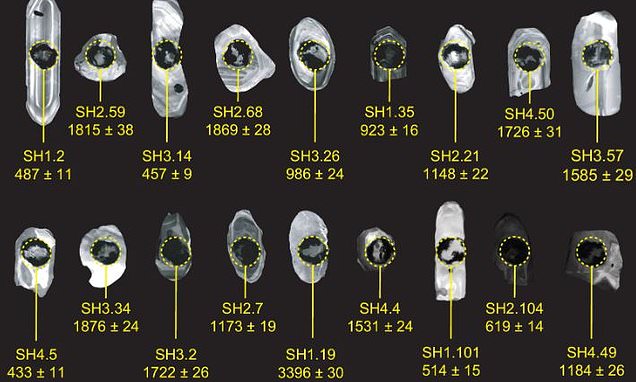
The 5,000-year-old mystery of how Stonehenge's massive stones were transported has potentially been solved, thanks to tiny grains of sand. Researchers from Curtin University utilized cutting-edge mineral fingerprinting techniques to analyze sand found on Salisbury Plain.

Their findings reveal that no glacial material reached the area during the last ice age (20,000 to 26,000 years ago). This directly contradicts the glacial transport theory, which proposed that ice sheets moved the megaliths. The geological 'fingerprint' of the sand did not match rocks from the bluestones' origin in Wales or the altar stone's origin in Scotland.

This evidence strongly suggests that the stones were moved by humans. Lead author Dr. Anthony Clarke stated that this aligns with views of Neolithic people using methods like sledges, rollers, and rivers. The bluestones, weighing two to five tonnes, originated from the Preseli Hills in Wales, while the altar stone came from northern Scotland, requiring immense effort to transport hundreds of miles.

trending

North Carolina winter storm emergency

trending

Pittsburgh area winter storm

trending

Extreme cold watch issued

trending

India's deltas sinking: study

trending

DC region snowstorm threat

trending

D.C. weekend winter storm

trending

Coldest air impacts New Hampshire

trending

Pittsburgh schools delayed or closed

trending

Jung Hoo Lee detained

The monument itself was built in four stages, with the final stage completed around 3,500 years ago. The current understanding is that Neolithic people engineered sophisticated methods for moving these heavy stones, potentially involving coastal transport by boat followed by overland hauling.

Disclaimer: This story has been auto-aggregated and auto-summarised by a computer program. This story has not been edited or created by the Feedzop team.
Scientists analyzed sand grains near Stonehenge using mineral fingerprinting, finding no evidence of glacial transport.
The theory suggested that ice sheets carried the massive stones of Stonehenge to Salisbury Plain from Wales and Scotland.
The bluestones came from the Preseli Hills in Wales, and the altar stone originated from northern Scotland.

Read more news on

Scienceside-arrow

You may also like

Wales' 'Pompeii': Hidden Roman Villa Unearthed

1 day ago • 7 reads

article image

UK Hit by Yellow Fog & Heavy Rain Alert

16 Jan • 34 reads

article image

Mystery Shoes Emerge on Welsh Beach

14 Jan • 43 reads

article image

Port Talbot's Pompeii: Astonishing Roman Villa Unearthed

12 Jan • 58 reads

article image

Wales braces for Storm Goretti's heavy snow.

8 Jan • 70 reads

article image