Home / Science / Stone Age Woman Buried Like Man Challenges Gender Norms
Stone Age Woman Buried Like Man Challenges Gender Norms
4 Mar
Summary
- A 7,000-year-old female skeleton was buried with male grave goods.
- The burial suggests Stone Age societies tolerated complex identities.
- Neolithic Hungary had flexible gender roles, experts reveal.
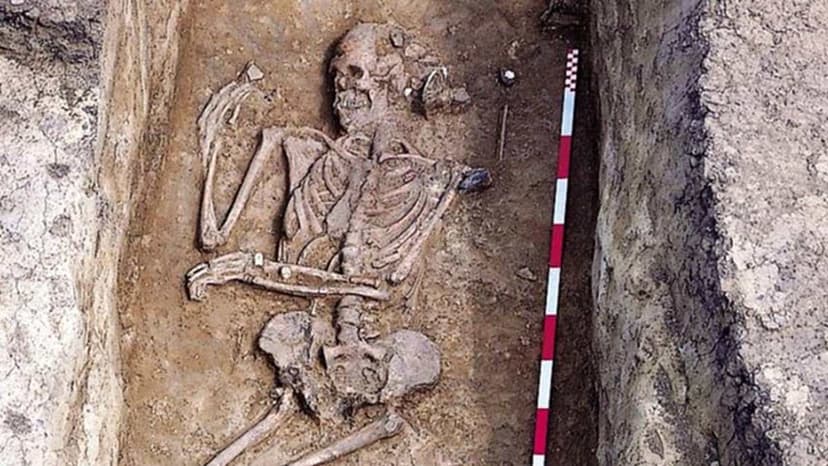
Recent archaeological findings in Hungary are shedding new light on the social complexities of Stone Age societies. Studies of 125 skeletons across several cemeteries indicate that while most individuals were buried according to gender norms, some defied these expectations.
Men were typically interred on their right side with polished stone tools, while women were often found on their left side with shell bead belts. However, one notable female burial from around 4800 BC at the Polgár-Csőszhalom cemetery included polished stone tools, a characteristic typically associated with male burials.
Furthermore, patterns on her toes suggested a kneeling activity common in men. This individual, along with other skeletons showing mixed gender markers, suggests that Stone Age societies were structured around gendered roles but also allowed for individual variation and complex identities.
The research, conducted by the French National Centre for Scientific Research, analyzed two Hungarian cemeteries. While one showed no clear sex-based differences in burial, the other exhibited distinct practices, supporting the idea that some females assumed male-associated roles and vice versa.