Home / Science / Star Swallowed Whole: Astronomers Witness Cosmic Merger
Star Swallowed Whole: Astronomers Witness Cosmic Merger
19 Nov
Summary
- A star was swallowed by a giant star in Andromeda galaxy.
- The smaller star spiraled inside the giant for seven years.
- James Webb Space Telescope provided crucial evidence for the merger.
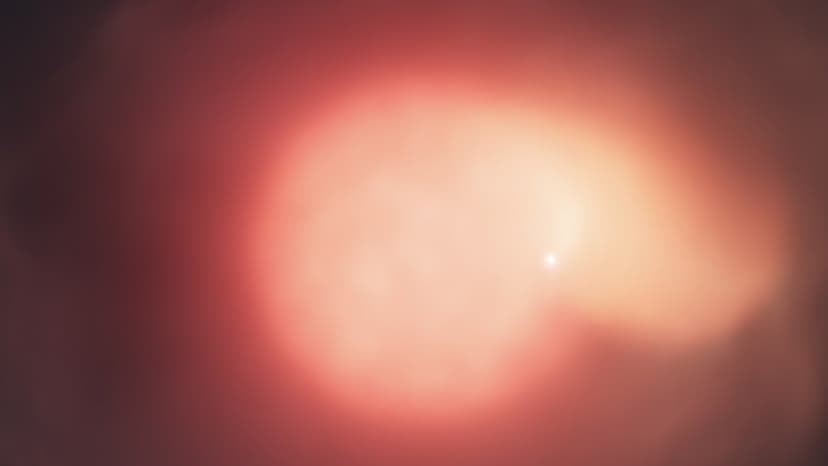
Astronomers have for the first time observed a star slightly less massive than the sun being swallowed by a giant star within the Andromeda Galaxy. This cosmic pair had orbited each other for thousands of years before the giant star engulfed its companion. The trapped star then spiraled towards the giant's core, a process that took roughly seven years, culminating in a merger.
This event, observed with the help of NASA's James Webb Space Telescope, provides crucial evidence for understanding how many star pairs end up in extremely close orbits. While the smaller star did not survive this particular encounter, scientists believe similar processes can lead to the formation of black holes, neutron stars, or supernovas in other systems.
The larger star, nicknamed 'Big Bao', was immense, possessing about seven times the sun's mass and shining 18,000 times brighter. As it swelled near the end of its life, it stripped gas from its smaller partner, 'Little Bao'. The friction from Little Bao's plunge generated heat that reached Big Bao's surface, causing it to brighten steadily for seven years.
This stellar merger triggered an explosion that propelled about one-tenth of the giant star's outer material into space. The event unfolded remarkably quickly, with the brightening observed over just a week. While such phenomena are rare, future telescopes like the Nancy Grace Roman Space Telescope are expected to detect hundreds more similar events in nearby galaxies.


