Home / Science / Spiders' Stomachs: Tiny DNA Detectives?
Spiders' Stomachs: Tiny DNA Detectives?
1 Sep
Summary
- Spiders can reveal surrounding wildlife through prey DNA.
- DNA detection in spiders lasts several days after a meal.
- Spiders offer a novel tool for studying food webs.
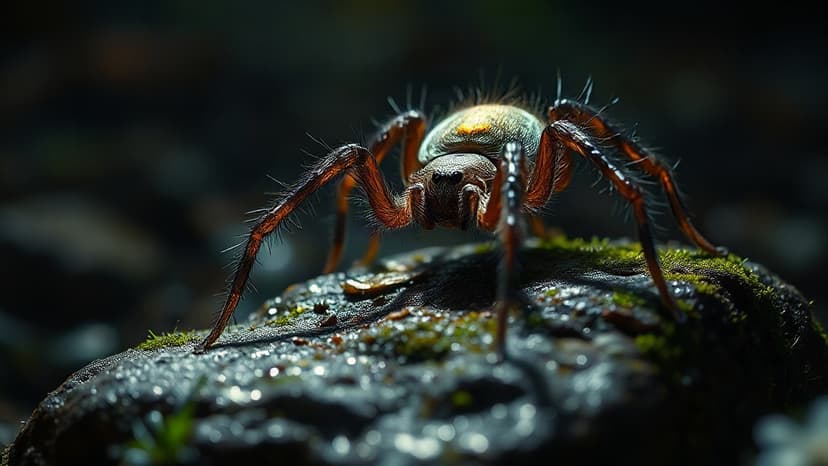
Spiders may hold the key to understanding the wildlife around them, according to a new study in 'Experimental and Applied Entomology.' Researchers have found that traces of prey DNA left inside spiders can indicate what animals inhabit an area.
Wolf spiders, known for their varied diets, were the focus of this investigation. Experiments demonstrated that DNA from consumed prey, such as fruit flies and crickets, remained detectable for several days after a meal. This genetic evidence, however, diminishes over time as digestion progresses, highlighting the critical role of the timing of sample collection and the laboratory techniques used.
The findings suggest that spiders could serve as valuable biological samplers. By analyzing the DNA within a spider's digestive system, scientists can gain insights into local food webs and the smaller creatures present in an ecosystem. This method offers an alternative to traditional observation, especially since spiders liquefy their prey, making traditional analysis challenging.
The research, conducted by Karlstad University scientists, employed DNA metabarcoding to detect degraded genetic material. While successful for some prey, detection rates varied, and the study noted that a negative DNA result doesn't confirm prey absence, as DNA might degrade beyond detection limits. This underscores the need for careful sampling and appropriate DNA analysis methods to fully utilize spiders as ecological indicators.


