Home / Science / Starship Engine Glitch Casts Shadow on Moon Mission Timelines
Starship Engine Glitch Casts Shadow on Moon Mission Timelines
29 Sep
Summary
- Starship engine failure on test flight may delay NASA's moon landing schedule.
- The mission aimed to deploy satellites and test orbital capabilities.
- SpaceX's Starship is a key vehicle for NASA's Artemis moon program.
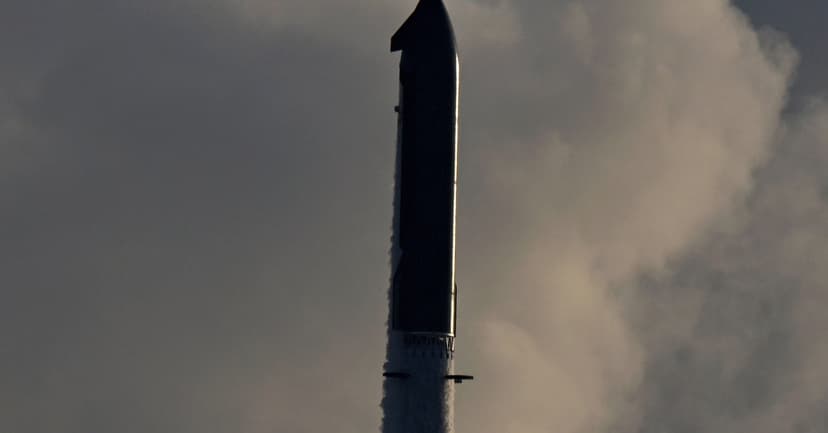
An engine failure during SpaceX's Starship's 14th uncrewed test flight on Monday, September 28, 2026, has cast doubt on NASA's timeline for astronaut missions to the moon. This critical setback could affect the agency's goal of landing humans by 2028.
Despite the propulsion system malfunction, which led to an early mission termination, Starship did achieve several key objectives, including its first-ever commercial satellite deployment. However, determining the cause of the engine glitch is paramount for both SpaceX's commercial goals and NASA's lunar program.
Starship is a vital component of NASA's Artemis program, designed to land humans on the moon for the first time since 1972. A delay in its development, potentially caused by the need for upgrades across the fleet, could impact upcoming test flights and the overall Artemis schedule.
The stakes are particularly high for the Artemis III mission, a rehearsal for the first crewed lunar landing, targeted for next summer. This mission relies heavily on Starship's capability for rendezvous and docking maneuvers in low Earth orbit.
SpaceX, founded by Elon Musk, is competing with Jeff Bezos's Blue Origin to provide lunar landers for NASA. While SpaceX was initially contracted, NASA has indicated it will proceed with whichever lander is ready first, acknowledging the delays in Starship's test flight program.
NASA officially aims to return astronauts to the moon's surface by 2028, a target seen as ambitious, particularly in light of China's planned lunar landing by 2030. A functioning Starship lunar lander is also required for the precursor Artemis III mission.
Blue Origin is developing its own traditional-design Blue Moon lander. Both landers are expected to participate in the Artemis III mission, demonstrating orbital maneuvers. This comes after NASA's Artemis II mission, which successfully sent astronauts around the moon and back.


