

Home / Science / US Space Ambitions: Artemis vs. SpaceX's IPO
US Space Ambitions: Artemis vs. SpaceX's IPO
9 Apr
Summary
- SpaceX IPO aims to raise $75bn, dwarfing Artemis mission costs.
- Government programs face penalties for cost overruns, unlike SpaceX.
- US must foster competition to avoid over-reliance on SpaceX.
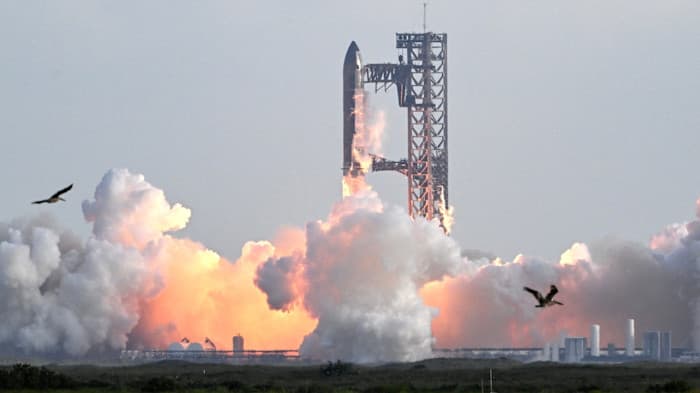
Last week, as the Artemis II mission launched for the first human lunar flight in over 50 years, SpaceX filed for a monumental $75 billion stock market listing. This juxtaposition highlighted the evolving landscape of US space exploration, contrasting a government-funded endeavor aiming to recapture past glories with an entrepreneurial drive to dominate the commercial space economy. The vast economic differences suggest an increasing reliance on private companies like SpaceX for future lunar and deep space missions.
Artemis II, a marvel of engineering, was developed under a cost-plus model, allowing for cost overruns and delays. Its non-reusable boosters lead to a launch cost of $4.1 billion. In contrast, SpaceX's Falcon rockets, the current workhorses for orbital missions, were developed with a fixed-cost-per-launch model, placing financial risk on the company. SpaceX has drastically reduced costs through rocket reusability, a model NASA estimates saved ten times the development cost compared to traditional government programs.
Should SpaceX's IPO succeed, Elon Musk will gain significant resources to expand his company's market presence. This includes advancing the Starship rocket to full commercial operations, further widening its cost advantage, and enhancing the Starlink satellite network. However, this growing reliance on SpaceX concerns both the US and other governments, as evidenced by past disputes over access to SpaceX services. For instance, Starlink's denial of access to Ukrainian forces underscored its national security implications.
Emerging competitors like Blue Origin, Rocket Lab, and Relativity Space are developing new generations of powerful rockets that promise to increase competition in the launch market. To foster this, NASA and the Pentagon must actively support these newer companies, even if their initial costs are higher. Promoting competition also requires hiring multiple suppliers for various space programs, a strategy that, despite potentially increasing costs, is crucial for enhancing resiliency, innovation, and averting over-dependence on any single entity.
