Home / Science / Space Sperm Struggle: Reproduction in Microgravity Challenged
Space Sperm Struggle: Reproduction in Microgravity Challenged
26 Mar
Summary
- Sperm exposed to microgravity tumble like untethered astronauts.
- Microgravity reduced human sperm's ability to navigate tracts by 40%.
- Adding progesterone may help guide sperm in space environments.
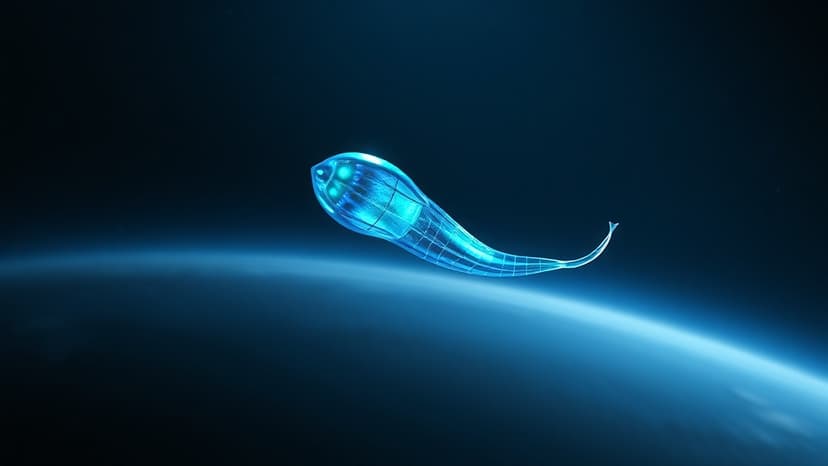
New research from Adelaide University indicates that human reproduction in space faces significant hurdles, with sperm becoming disoriented and struggling to navigate in microgravity. Experiments mimicking the weightlessness experienced on the International Space Station showed that sperm tumbled uncontrollably, losing their sense of direction. This disorientation led to approximately a 40% reduction in the success rate of human sperm navigating a simulated reproductive tract compared to a control group. The study utilized sperm samples from humans, mice, and pigs, also observing effects on early embryo development in the latter two. Researchers found that adding progesterone could aid sperm navigation, potentially by mimicking signals released by eggs. This groundbreaking work is crucial as nations and private companies plan long-term human settlements on the Moon and Mars, necessitating an understanding of early reproductive events in extraterrestrial environments. The findings also offer valuable insights for reproductive science on Earth.
Previous investigations into reproduction in space date back to the 1980s, with studies on rats and mouse embryos. More recently, NASA sent human sperm to the ISS in 2018 to examine weightlessness effects. This ongoing research is vital for becoming a multi-planetary species. Scientists have called for increased international collaboration to address knowledge gaps concerning microgravity and radiation's impact on reproductive health in space and to establish ethical guidelines for future endeavors.