feedzop-word-mark-logo
searchLogin
Feedzop
homeFor YouUnited StatesUnited States
You
bookmarksYour BookmarkshashtagYour Topics
Trending
trending

Taiwan hit by magnitude 7 earthquake

trending

BYU wins Pop-Tarts Bowl

trending

Fulham defeats West Ham United

trending

Texans beat Chargers, clinch berth

trending

Arizona Bowl: Miami vs Fresno

trending

Senegal draws with DR Congo

trending

Chelsea vs Aston Villa

trending

Clemson plays Penn State outdoors

trending

Pittsburgh vs East Carolina preview

Terms of UsePrivacy PolicyAboutJobsPartner With Us

© 2025 Advergame Technologies Pvt. Ltd. ("ATPL"). Gamezop ® & Quizzop ® are registered trademarks of ATPL.

Gamezop is a plug-and-play gaming platform that any app or website can integrate to bring casual gaming for its users. Gamezop also operates Quizzop, a quizzing platform, that digital products can add as a trivia section.

Over 5,000 products from more than 70 countries have integrated Gamezop and Quizzop. These include Amazon, Samsung Internet, Snap, Tata Play, AccuWeather, Paytm, Gulf News, and Branch.

Games and trivia increase user engagement significantly within all kinds of apps and websites, besides opening a new stream of advertising revenue. Gamezop and Quizzop take 30 minutes to integrate and can be used for free: both by the products integrating them and end users

Increase ad revenue and engagement on your app / website with games, quizzes, astrology, and cricket content. Visit: business.gamezop.com

Property Code: 5571

Home / Science / Space Junk's Hidden Threat: Ozone Depletion

Space Junk's Hidden Threat: Ozone Depletion

30 Dec

•

Summary

  • Burning satellites release chemicals, depleting the ozone layer.
  • Aluminum oxide nanoparticles from satellites have increased ozone destruction.
  • A 'design for non-demise' approach suggests satellites survive reentry.
Space Junk's Hidden Threat: Ozone Depletion

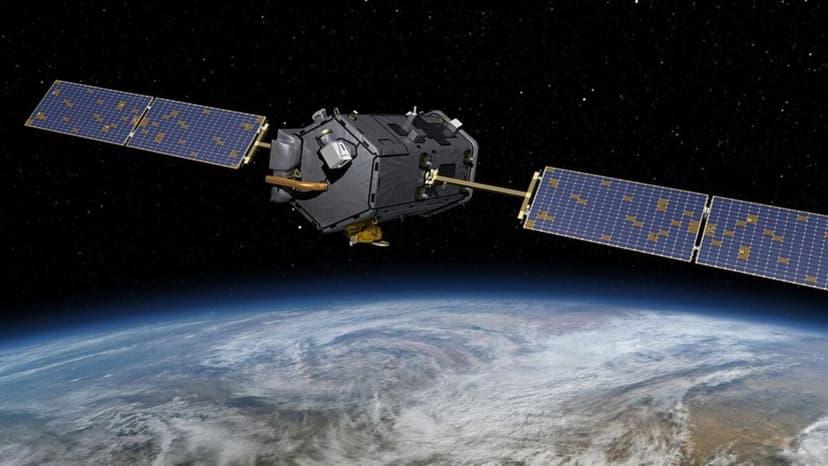
The escalating number of satellites burning up in Earth's atmosphere poses a growing threat to the protective ozone layer. Each year, thousands of end-of-life satellites disintegrate, releasing chemicals that catalyze ozone depletion. A recent study revealed that a typical satellite can produce substantial aluminum oxide nanoparticles upon reentry, leading to a significant increase in harmful atmospheric oxides.

This pollution directly impacts the stratosphere, where the ozone layer shields Earth from harmful ultraviolet radiation. The current practice of 'design for demise' aims to limit space debris but exacerbates environmental concerns. Researchers are now exploring an alternative: 'design for non-demise,' which involves creating satellites capable of surviving atmospheric reentry.

This novel approach, while presenting its own challenges like controlled reentry and increased costs, could mitigate atmospheric damage. Weighing the environmental impact of burning satellites against the risks of controlled reentry will be crucial in determining the future of space exploration and its ecological footprint.


Disclaimer: This story has been auto-aggregated and auto-summarised by a computer program. This story has not been edited or created by the Feedzop team.
When satellites burn up during reentry, they release aluminum oxide nanoparticles. These particles catalyze reactions that destroy ozone molecules in the stratosphere.
MaiaSpace proposes a 'design for non-demise' approach, where satellites are built to survive reentry, minimizing atmospheric pollution.
This approach may increase costs for satellite operators and requires controlled reentry to prevent debris from falling on populated areas.

Read more news on

Scienceside-arrow

You may also like

Backyard Birds Choking on Microplastics

24 Dec • 31 reads

article image

Moon's Future: A Satellite Graveyard?

22 Dec • 69 reads

article image

Ocean Currents Surge: Japan's Fisheries Face Climate Shock

17 Dec • 52 reads

article image

Fish Gills Inspire Microplastic Filter for Laundry

9 Dec • 91 reads

article image

Circular Economy Launches into Orbit

3 Dec • 77 reads

article image