feedzop-word-mark-logo
searchLogin
Feedzop
homeFor YouUnited StatesUnited States
You
bookmarksYour BookmarkshashtagYour Topics
Trending
Terms of UsePrivacy PolicyAboutJobsPartner With Us

© 2026 Advergame Technologies Pvt. Ltd. ("ATPL"). Gamezop ® & Quizzop ® are registered trademarks of ATPL.

Gamezop is a plug-and-play gaming platform that any app or website can integrate to bring casual gaming for its users. Gamezop also operates Quizzop, a quizzing platform, that digital products can add as a trivia section.

Over 5,000 products from more than 70 countries have integrated Gamezop and Quizzop. These include Amazon, Samsung Internet, Snap, Tata Play, AccuWeather, Paytm, Gulf News, and Branch.

Games and trivia increase user engagement significantly within all kinds of apps and websites, besides opening a new stream of advertising revenue. Gamezop and Quizzop take 30 minutes to integrate and can be used for free: both by the products integrating them and end users

Increase ad revenue and engagement on your app / website with games, quizzes, astrology, and cricket content. Visit: business.gamezop.com

Property Code: 5571

Home / Science / Soviet Nuclear Blast Tames Fiery Inferno

Soviet Nuclear Blast Tames Fiery Inferno

11 Feb

•

Summary

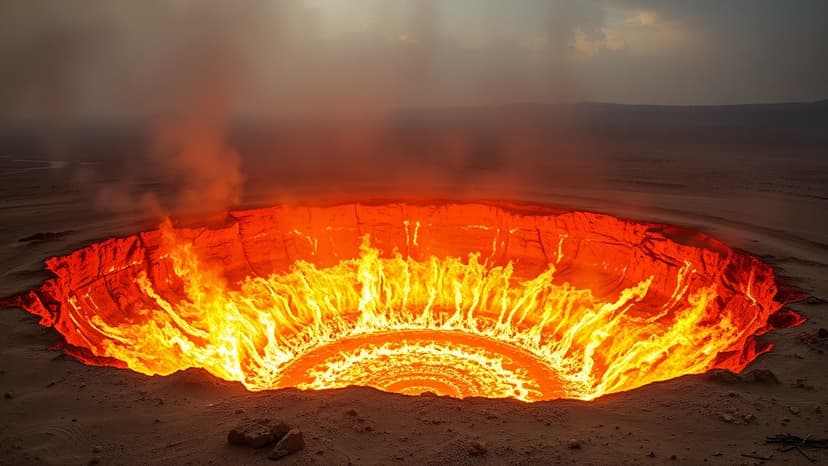
  • A 30-kiloton nuclear device extinguished a 1,074-day gas fire.
  • A 120-meter high flame consumed 12 million cubic meters of gas daily.
  • Nuclear detonation crushed the gas source, stopping the blaze safely.
Soviet Nuclear Blast Tames Fiery Inferno

A devastating gas fire at the Urta-Bulak field in Uzbekistan burned uncontrollably for 1,074 days, beginning on December 1, 1963. The inferno consumed 12 million cubic meters of gas daily, visible for hundreds of kilometers and posing significant environmental and safety risks. Initial efforts using water, sand, and even artillery proved futile against the high-pressure gas reservoir.

In September 1966, a radical solution was implemented. Academician Mstislav Keldysh proposed detonating a 30-kiloton nuclear device underground. The plan aimed to use the resulting shockwave to crush the gas source. Kamil Mangushev led the task force, drilling an inclined well to position the specially designed nuclear warhead near the fire's origin.

On September 30, 1966, the bomb was detonated. The underground blast successfully extinguished the 1,074-day fire without detectable radioactive contamination. This event showcased an extreme, yet effective, application of nuclear energy for peaceful purposes, resolving an unprecedented crisis. Both Keldysh and Mangushev were highly regarded for their contributions.

trending

Salesforce lays off 1000

trending

India US trade tariffs slashed

trending

Margot Robbie's Wuthering Heights panned

trending

CBSE board exams: key details

trending

Jana Nayagan movie court case

trending

Dhakshineswar Suresh Davis Cup hero

trending

Deepika Padukone wears Gaurav Gupta

trending

NZ vs UAE match prediction

trending

iPhone 17 Croma Valentine's sale

Disclaimer: This story has been auto-aggregated and auto-summarised by a computer program. This story has not been edited or created by the Feedzop team.
The gas fire at the Urta-Bulak field burned for 1,074 days.
A 30-kiloton nuclear device was detonated underground near the fire to crush the gas source.
No, the dosimetry service reported no traces of radioactive contamination after the underground nuclear detonation.

Read more news on

Scienceside-arrow

You may also like

Fish Disco Saves Nuclear Power Plant's Fish

1 day ago • 4 reads

article image

Suzlon Energy Achieves Highest Quarterly Deliveries, Profit Jumps

5 Feb • 32 reads

article image

Newcleo Secures 75M Euros for Nuclear Innovation

4 Feb • 25 reads

article image

KPI Green Energy Secures Major Adani Solar Contracts

16 Jan • 140 reads

article image

Small Reactors, Big Bets: Nuclear's Comeback

11 Jan • 129 reads

article image