feedzop-word-mark-logo
searchLogin
Feedzop
homeFor YouUnited StatesUnited States
You
bookmarksYour BookmarkshashtagYour Topics
Trending
trending

NFL playoff picture shaken up

trending

Sheinelle Jones TODAY co-host

trending

Dodgers sign Edwin Díaz

trending

Schwarber signs Phillies contract

trending

North Forsyth High stabbing

trending

Medline targets $55B valuation

trending

Angels acquire Vaughn Grissom

trending

Champions League returns on NOW

trending

Salah criticizes Liverpool, future uncertain

Terms of UsePrivacy PolicyAboutJobsPartner With Us

© 2025 Advergame Technologies Pvt. Ltd. ("ATPL"). Gamezop ® & Quizzop ® are registered trademarks of ATPL.

Gamezop is a plug-and-play gaming platform that any app or website can integrate to bring casual gaming for its users. Gamezop also operates Quizzop, a quizzing platform, that digital products can add as a trivia section.

Over 5,000 products from more than 70 countries have integrated Gamezop and Quizzop. These include Amazon, Samsung Internet, Snap, Tata Play, AccuWeather, Paytm, Gulf News, and Branch.

Games and trivia increase user engagement significantly within all kinds of apps and websites, besides opening a new stream of advertising revenue. Gamezop and Quizzop take 30 minutes to integrate and can be used for free: both by the products integrating them and end users

Increase ad revenue and engagement on your app / website with games, quizzes, astrology, and cricket content. Visit: business.gamezop.com

Property Code: 5571

Home / Science / Sharks Fooled: New Tech Makes Swimmers Invisible

Sharks Fooled: New Tech Makes Swimmers Invisible

10 Dec

•

Summary

  • New tech could make humans invisible to sharks using blue light.
  • Experiments show blue LED lights on dummies deterred Great Whites.
  • This method mimics deep-sea animals' counter-illumination defense.
Sharks Fooled: New Tech Makes Swimmers Invisible

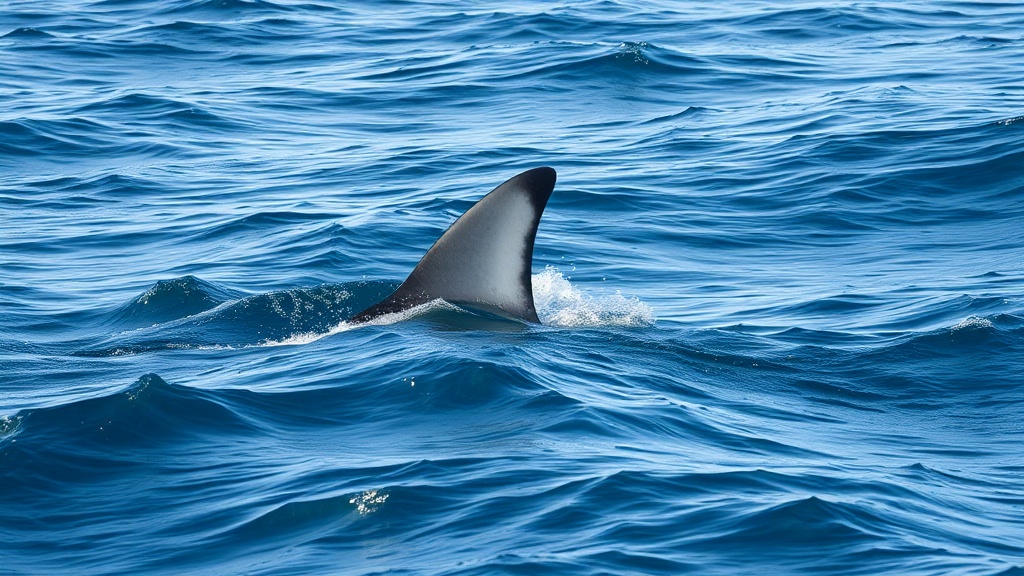
Shark attacks might soon be eradicated in Australia with a revolutionary new technology that renders humans invisible to these predators. Scientist Dr. James O'Hanlon's research explores animal deception, highlighting "counter-illumination" as a key defense mechanism. This involves animals on their bellies glowing blue to match the sky, making them undetectable from below.

Recent experiments involving seal-shaped dummies equipped with blue LED lights proved remarkably effective. When dragged through Great White Shark territory off South Africa, these illuminated dummies were completely ignored by sharks, unlike unlit ones. This suggests that simple and inexpensive LED technology could be integrated into surfboards and wetsuits.

Previous attempts at shark deterrents, like striped wetsuits, proved unsuccessful as they misinterpreted the principle of camouflage. The "counter-illumination" technique, however, offers a scientifically validated approach to preventing shark encounters, potentially bringing an end to dangerous incidents for swimmers and surfers.

Disclaimer: This story has been auto-aggregated and auto-summarised by a computer program. This story has not been edited or created by the Feedzop team.
Yes, experiments with blue LED lights on dummy seals showed they deterred Great White Sharks, suggesting this could be applied to wetsuits and surfboards.
Counter-illumination is a defense where sea creatures glow blue on their bellies to match the sky, making them invisible to predators looking up from below.
No, previous methods like striped wetsuits were unsuccessful. The new approach focuses on mimicking the sky's light, making humans invisible.

Read more news on

Scienceside-arrowAustraliaside-arrowSouth Africaside-arrow

You may also like

Shark Bites Back at Captor in Defense

5 Dec • 3 reads

article image

Brendan Fraser's Oscar win didn't erase deep self-doubt

4 Dec • 11 reads

article image

Australia Debates Shark Nets After Fatal Attacks

3 Dec • 33 reads

article image

Orcas Violently Attack Dutch Yacht Off Portugal Coast

2 Dec • 43 reads

article image

Sharks Get New Protections: Trade Bans for Over 70 Species

29 Nov • 36 reads

article image