Home / Science / Pune Excavation Reveals Lost Satavahana City
Pune Excavation Reveals Lost Satavahana City
16 Jul
Summary
- Structural remains and artifacts point to a Satavahana-era trade center.
- Evidence shows farming, craft activity, and extensive trade networks existed.
- Drone surveys and photogrammetry used for detailed site modeling.
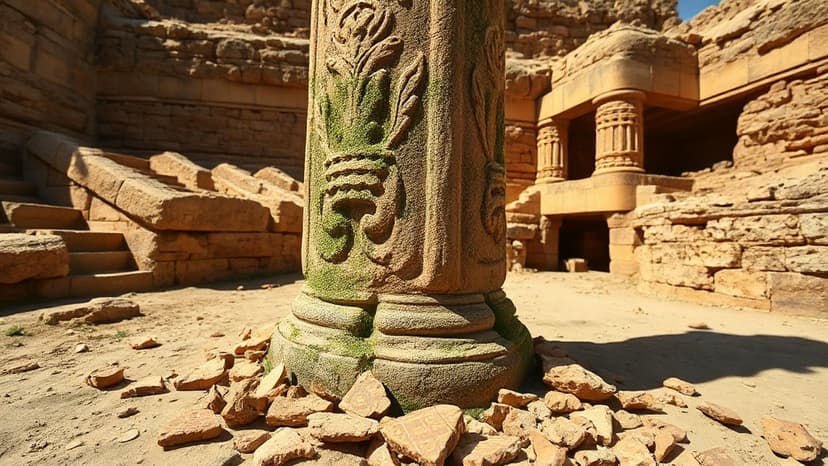
Archaeologists working in Kotul, located on the banks of the Mula River in Ahilyanagar district, have uncovered structural remains, pottery, wells, and various artifacts. These discoveries point to the existence of an important Satavahana-era trade center that likely connected key ancient cities like Junnar and Nashik.
The findings suggest a medieval habitation site overlying an earlier historic settlement. This preservation spans from the Early Historic to the medieval period, reflecting a sophisticated farming economy, vibrant craft activities, and extensive long-distance trade networks characteristic of the Satavahana dynasty, which ruled the Deccan plateau from the late 2nd century BCE to the early 3rd century CE.
Researchers from Deccan College Post Graduate and Research Institute documented carbonized plant remains, revealing an entrenched agricultural system. The ancient inhabitants cultivated crops such as rice, various millets, and pulses. Analysis of animal remains indicates the importance of cattle, sheep, and pigs, alongside diverse utilization of local resources like fish and birds.
Advanced techniques, including drone surveys and photogrammetry, were utilized to generate detailed 3D digital models of the excavation site. These visualizations are crucial for conservation efforts and future research, potentially establishing Kotul as a vital reference point for understanding Satavahana period settlements in the Sahyadri foothills.


