

Home / Science / 3D Printing Fuels Russia's New Eco-Rocket Engine
3D Printing Fuels Russia's New Eco-Rocket Engine
9 Apr
Summary
- UEC is developing the NK-3 engine using 3D printing for complex parts.
- The Voronezh rocket will feature variable thrust and eco-friendly fuel.
- First launch of the Voronezh rocket is scheduled for 2029.
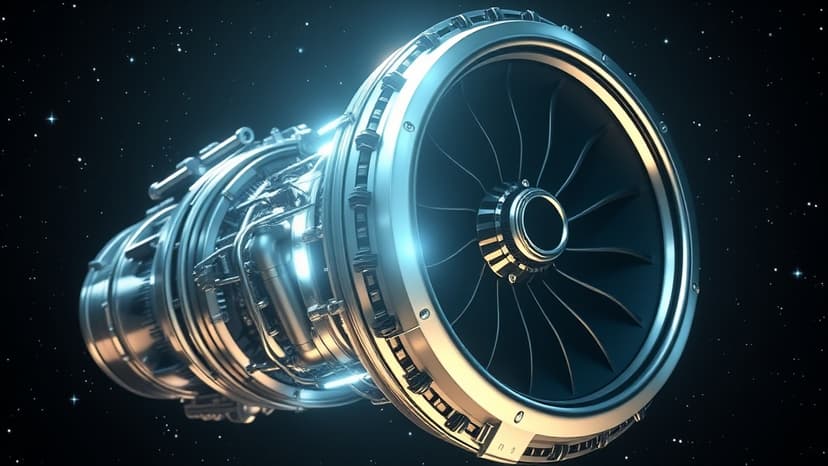
Russia's United Engine Corporation (UEC) is employing advanced 3D printing technologies in the creation of its new NK-3 engine. This engine is being developed for the upcoming Voronezh ultra-light carrier rocket, designed to launch small spacecraft into low-Earth orbits. The NK-3 engine will feature a variable thrust capability, allowing for trajectory adjustments, and will operate using environmentally friendly fuel.
Complex body parts for the NK-3 engine are slated for manufacturing via additive technologies, a move aimed at accelerating development and facilitating the testing of various designs. The first stage of the Voronezh rocket will incorporate twelve NK-3 engines, while the second stage will be equipped with one. This new rocket is projected to be approximately 20 meters long and 2 meters in diameter.
The Voronezh rocket project is a prospective two-stage liquid-propellant rocket. Its anticipated first launch is set for 2029, with the rocket designed for quick satellite replacements and regular launches. UEC aims to utilize modern technologies and borrow certain components from existing engines, such as the RD-107A, while developing other parts from scratch to optimize performance and efficiency.
