feedzop-word-mark-logo
searchLogin
Feedzop
homeFor YouUnited StatesUnited States
You
bookmarksYour BookmarkshashtagYour Topics
Trending
Terms of UsePrivacy PolicyAboutJobsPartner With Us

© 2026 Advergame Technologies Pvt. Ltd. ("ATPL"). Gamezop ® & Quizzop ® are registered trademarks of ATPL.

Gamezop is a plug-and-play gaming platform that any app or website can integrate to bring casual gaming for its users. Gamezop also operates Quizzop, a quizzing platform, that digital products can add as a trivia section.

Over 5,000 products from more than 70 countries have integrated Gamezop and Quizzop. These include Amazon, Samsung Internet, Snap, Tata Play, AccuWeather, Paytm, Gulf News, and Branch.

Games and trivia increase user engagement significantly within all kinds of apps and websites, besides opening a new stream of advertising revenue. Gamezop and Quizzop take 30 minutes to integrate and can be used for free: both by the products integrating them and end users

Increase ad revenue and engagement on your app / website with games, quizzes, astrology, and cricket content. Visit: business.gamezop.com

Property Code: 5571

Home / Science / Russian Space Station Dodges Radiation Risk

Russian Space Station Dodges Radiation Risk

27 Jan

•

Summary

  • Bion-M No. 2 satellite launch prevented an orbital inclination error.
  • Polar orbit radiation levels exceed those experienced by the ISS.
  • Roscosmos used satellite data to inform future station design.
Russian Space Station Dodges Radiation Risk

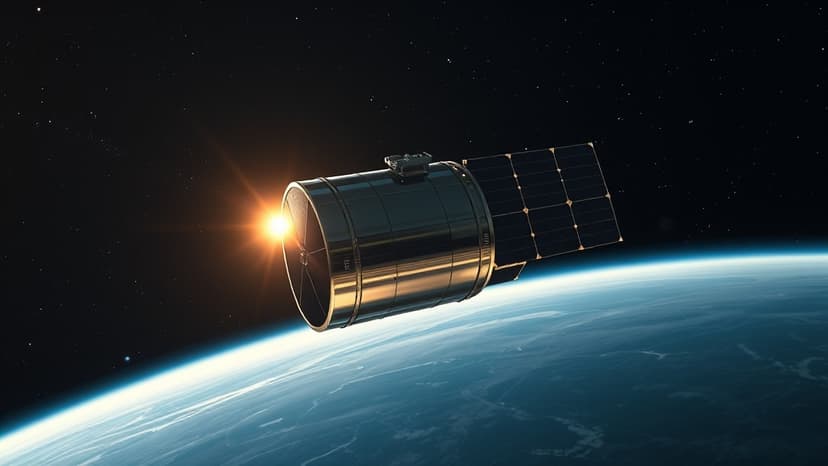
Roscosmos has successfully averted a critical error in the orbital inclination selection for the upcoming Russian Orbital Station (ROS). The launch and subsequent mission of the Bion-M No. 2 satellite, which occurred from August 20 to September 19, 2025, provided vital data.

This satellite was specifically sent into polar orbit to assess its viability for the ROS. The findings indicated that radiation levels in polar orbit are substantially higher than those encountered by the International Space Station (ISS) in its current orbital path.

According to Roscosmos CEO Dmitry Bakanov, this critical experiment allowed the corporation to make informed decisions and prevent a costly mistake in determining the ROS's orbital inclination, ensuring the safety and longevity of future Russian space endeavors.

This story has been auto-aggregated and auto-summarised by a computer program. This story has not been edited or created by the Feedzop team.
Disclaimer:
The Bion-M No. 2 satellite was launched into polar orbit to assess radiation levels and determine the suitability of this inclination for the Russian Orbital Station.
The satellite's mission revealed that the radiation load in polar orbit is higher than the radiation load experienced by the International Space Station.
The data gathered from the Bion-M No. 2 satellite's mission allowed Roscosmos to avoid making an error in selecting the orbital inclination for the Russian Orbital Station.

Read more news on

Scienceside-arrow
trending

Ohio snow emergency declared

trending

TikTok down in United States

trending

Andreeva matches Venus Williams' feat

trending

Warrington Hospital baby death

trending

Alexander Zverev advances in Australia

trending

Oilers host Capitals

trending

London celebrates Chinese New Year

trending

Liza Minnelli defends AI use

You may also like

ISS Crew Safe Amidst Major Solar Storm

20 Jan • 53 reads

article image

ISS Crew Returns Early Due to Medical Emergency

12 Jan • 120 reads

article image

ISS Deorbit Countdown: Astronauts Prep for Fiery End

8 Jan • 129 reads

article image

Space Partners: Roscosmos & NASA Cooperate Despite Disagreements

27 Nov, 2025 • 284 reads

article image

Russian AI Heads to Space: GigaChat on ISS

27 Nov, 2025 • 291 reads

article image