feedzop-word-mark-logo
searchLogin
Feedzop
homeFor YouUnited StatesUnited States
You
bookmarksYour BookmarkshashtagYour Topics
Trending
Terms of UsePrivacy PolicyAboutJobsPartner With Us

© 2026 Advergame Technologies Pvt. Ltd. ("ATPL"). Gamezop ® & Quizzop ® are registered trademarks of ATPL.

Gamezop is a plug-and-play gaming platform that any app or website can integrate to bring casual gaming for its users. Gamezop also operates Quizzop, a quizzing platform, that digital products can add as a trivia section.

Over 5,000 products from more than 70 countries have integrated Gamezop and Quizzop. These include Amazon, Samsung Internet, Snap, Tata Play, AccuWeather, Paytm, Gulf News, and Branch.

Games and trivia increase user engagement significantly within all kinds of apps and websites, besides opening a new stream of advertising revenue. Gamezop and Quizzop take 30 minutes to integrate and can be used for free: both by the products integrating them and end users

Increase ad revenue and engagement on your app / website with games, quizzes, astrology, and cricket content. Visit: business.gamezop.com

Property Code: 5571

Home / Science / Roman Secret: Venus Temple's 2000-Year Secret

Roman Secret: Venus Temple's 2000-Year Secret

28 Nov, 2025

•

Summary

  • Romans used volcanic materials to make the Temple of Venus exceptionally durable.
  • The temple's materials continue to consolidate and strengthen over time.
  • Ground movement has submerged the ancient structure by about 20 feet.
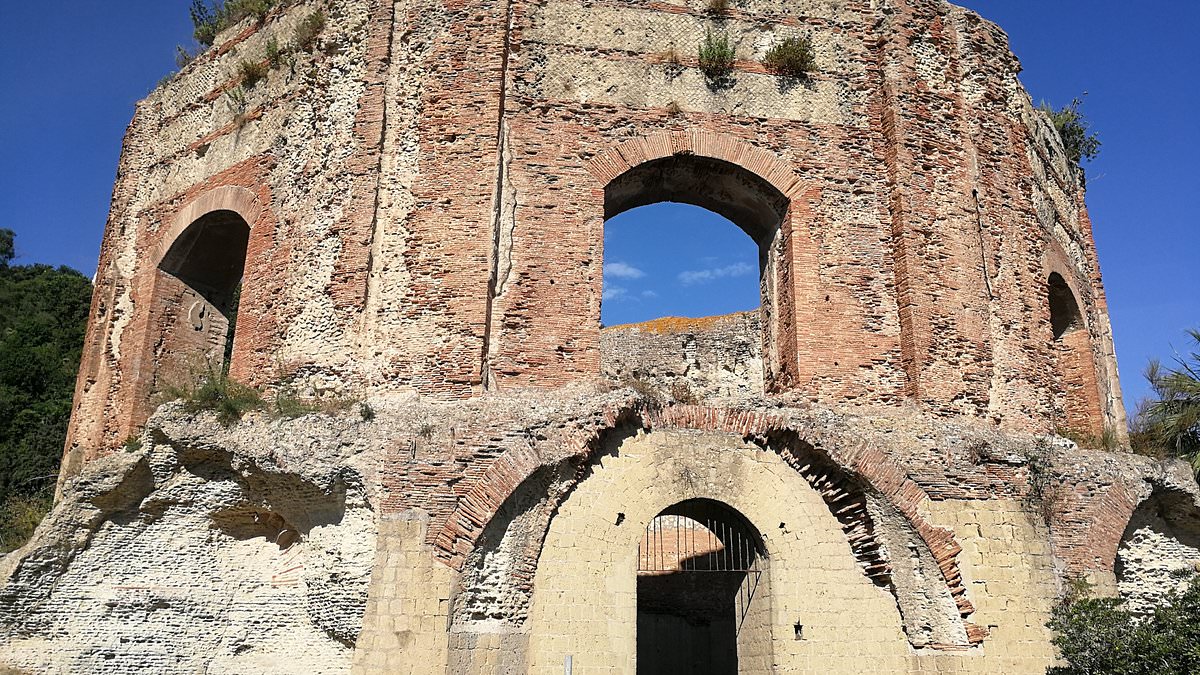
Roman Secret: Venus Temple's 2000-Year Secret

Scientists have uncovered the secrets behind the astonishing durability of the nearly 2,000-year-old Temple of Venus, located in Baiae, Italy. This octagonal Roman structure, commissioned by Emperor Hadrian, has withstood the test of time in a geologically active volcanic region. The key lies in the Romans' advanced understanding of materials; they intentionally incorporated volcanic ash and scoria into the lime-based mortars.

These volcanic additions triggered chemical reactions, forming new minerals that made the structure incredibly solid and resistant to environmental stresses, including bradyseism—the slow rising and sinking of the Earth's surface. The materials behave almost like natural rock, continuously consolidating rather than weakening. This careful selection and use of local volcanic resources demonstrate sophisticated Roman engineering.

The Temple of Venus, once a grand bathing hall, now stands about 20 feet below its original ground level due to seismic activity. The study highlights the innovative technical skills of the ancient Romans, emphasizing their focus on sustainability, durability, and aesthetic beauty in monumental construction. Their methods continue to inspire architects and researchers today.

Disclaimer: This story has been auto-aggregated and auto-summarised by a computer program. This story has not been edited or created by the Feedzop team.
The Temple of Venus is durable because Roman builders intentionally mixed lime with local volcanic materials, creating a mortar that strengthens over time.
The temple is in the Phlegraean Fields, a volcanic area prone to bradyseism, causing the ground to sink and submerge the structure by about 20 feet.
The Temple of Venus was built to the orders of Emperor Hadrian in the 2nd century as part of a public bath complex.

Read more news on

Scienceside-arrowItalyside-arrow
trending

Toyota recalls Tundra vehicles

trending

Bear spray attacks Houston stores

trending

Baltimore snowstorm causes closures

trending

Cincinnati winter storm warning issued

trending

Boston snow storm warning

trending

Walmart Kroger winter storm updates

trending

NYC winter storm watch

trending

Indians choose ePassports increasingly

trending

Osaka withdraws from Australian Open

You may also like

Rare Gentileschi Self-Portrait, Valued at $3.5M, to Hit Auction Block

2 hours ago • 3 reads

article image

Vitruvius' Lost Building Found in Italy!

1 day ago • 5 reads

article image

Egyptologist Nears Discovery of Nefertiti's Ancient Tomb

19 Jan • 28 reads

article image

Roman Concrete's Self-Healing Secret Unearthed!

20 Dec, 2025 • 174 reads

article image

Roman Soldiers Battled Diarrhea Near Hadrian's Wall

19 Dec, 2025 • 154 reads

article image