Home / Science / NASA's Roman Telescope Doubles Lifespan
NASA's Roman Telescope Doubles Lifespan
17 Sep
Summary
- New telescope may operate for 22 years, exceeding initial plans.
- Accurate mid-course corrections saved significant fuel reserves.
- Additional fuel was added before launch for extended operations.
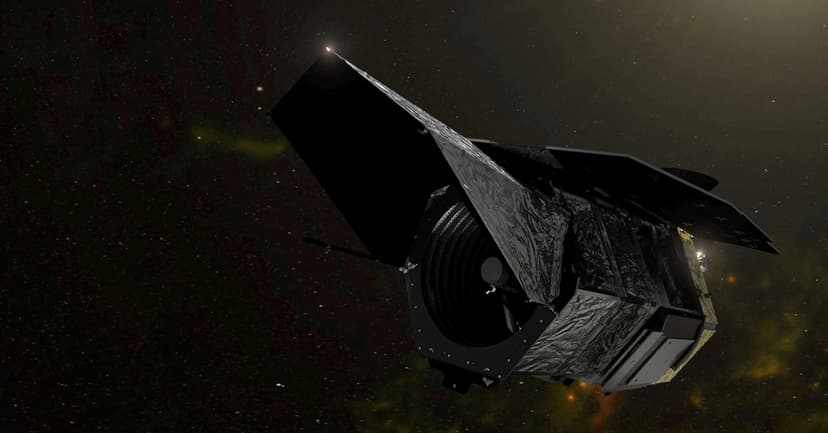
The Nancy Grace Roman Space Telescope, NASA's newest flagship observatory, is anticipated to have an operational lifespan of at least 22 years. This projection far surpasses the originally planned five-year primary mission plus a five-year extension, supported by a 10-year fuel budget.
The extended duration is attributed to the exceptional accuracy of its initial mid-course correction maneuvers en route to its orbital destination at Lagrange Point 2 (L2). Additionally, pre-launch preparations included adding extra fuel, and the telescope's first course correction used less than 10% of the budgeted amount.
Launched on August 30 from Cape Canaveral, Florida, aboard a SpaceX Falcon Heavy rocket, Roman aims to investigate profound astrophysical mysteries like dark energy and dark matter. It will also test gravity at large scales and search for exoplanets, building upon the legacy of observatories such as Hubble and James Webb. The telescope is expected to reach its L2 orbit by early December.


