feedzop-word-mark-logo
searchLogin
Feedzop
homeFor YouUnited StatesUnited States
You
bookmarksYour BookmarkshashtagYour Topics
Trending
Terms of UsePrivacy PolicyAboutJobsPartner With Us

© 2026 Advergame Technologies Pvt. Ltd. ("ATPL"). Gamezop ® & Quizzop ® are registered trademarks of ATPL.

Gamezop is a plug-and-play gaming platform that any app or website can integrate to bring casual gaming for its users. Gamezop also operates Quizzop, a quizzing platform, that digital products can add as a trivia section.

Over 5,000 products from more than 70 countries have integrated Gamezop and Quizzop. These include Amazon, Samsung Internet, Snap, Tata Play, AccuWeather, Paytm, Gulf News, and Branch.

Games and trivia increase user engagement significantly within all kinds of apps and websites, besides opening a new stream of advertising revenue. Gamezop and Quizzop take 30 minutes to integrate and can be used for free: both by the products integrating them and end users

Increase ad revenue and engagement on your app / website with games, quizzes, astrology, and cricket content. Visit: business.gamezop.com

Property Code: 5571

Home / Science / Roman Concrete's Self-Healing Secret Unearthed!

Roman Concrete's Self-Healing Secret Unearthed!

20 Dec, 2025

•

Summary

  • An active Roman construction site in Pompeii, frozen in time, reveals concrete mixing secrets.
  • Self-healing concrete contained lime clasts activated by water to seal cracks.
  • Hot-mixing method used, differing from architect Vitruvius's described techniques.
Roman Concrete's Self-Healing Secret Unearthed!

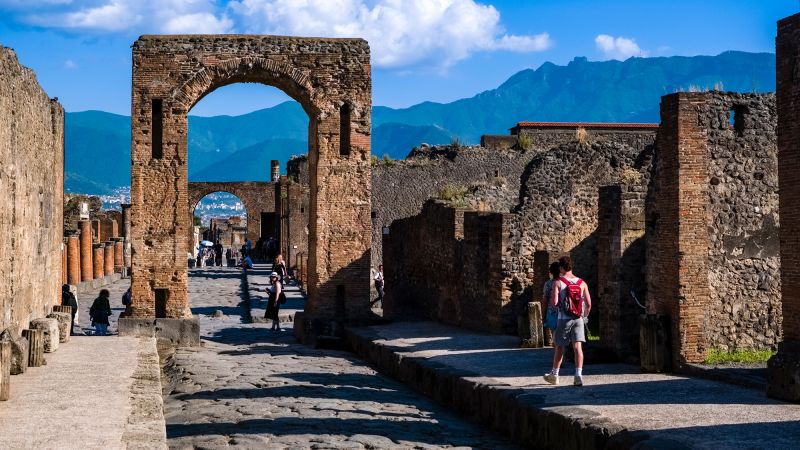
An active construction site in Pompeii, preserved by the AD 79 volcanic eruption, has provided unprecedented insight into ancient Rome's remarkable self-healing concrete. Excavations revealed building materials and half-finished walls, offering a clear glimpse into the Romans' innovative construction methods.

The ancient concrete's durability stems from its self-healing properties. Researchers identified lime clasts within the material, which, when cracks formed and water was introduced, would dissolve and recrystallize to seal the damage. This mechanism ensured the longevity of structures that still stand today.

Analysis confirmed that Romans employed a 'hot-mixing' process for concrete, combining lime with dry ingredients before adding water. This method generated heat and trapped the self-healing components. The discovery challenges earlier theories based on architectural writings, highlighting the ingenuity of Roman workers.

trending

Mississippi shooting: six killed

trending

Instagram password reset cyberattack

trending

Australian Open: TV schedule

trending

Michael McKee arrested for murder

trending

Biker gangs bar fight trial

trending

Burglar killing: Self-defense claim?

trending

NFL playoff games schedule

trending

Stafford, Robinson lead All-Pro team

trending

Timberwolves beat Cavaliers 131-122

Disclaimer: This story has been auto-aggregated and auto-summarised by a computer program. This story has not been edited or created by the Feedzop team.
The secret lies in lime clasts, mineral chunks that could fill cracks when exposed to water.
The recipe was revealed at an active construction site in Pompeii, preserved by the AD 79 eruption.
The discovery shows Romans used 'hot-mixing' of dry ingredients, unlike Vitruvius's described method of adding water first.

Read more news on

Scienceside-arrowRomeside-arrow

You may also like

Pompeii Victims Wore Wool for Vesuvius Blast

18 Dec, 2025 • 94 reads

article image

Roman Soldiers Battled Diarrhea Near Hadrian's Wall

19 Dec, 2025 • 94 reads

article image

Rome Unearths Ancient Treasures on New Metro Line

16 Dec, 2025 • 115 reads

article image

Ancient Rome's Roads: More Vast Than Imagined

9 Dec, 2025 • 99 reads

article image

Lost Pompeii Towers Revealed by Digital Dig

7 Dec, 2025 • 134 reads

article image