Home / Science / Tiny Fish's Wild Head Hole Creates Buzzing Sound
Tiny Fish's Wild Head Hole Creates Buzzing Sound
10 Jan
Summary
- Rockhead poacher uses its skull cavity as a percussion instrument.
- Ribs strike the cavity, producing a loud buzzing sound for its size.
- The fish inhabits shallow intertidal parts of the northeastern Pacific.
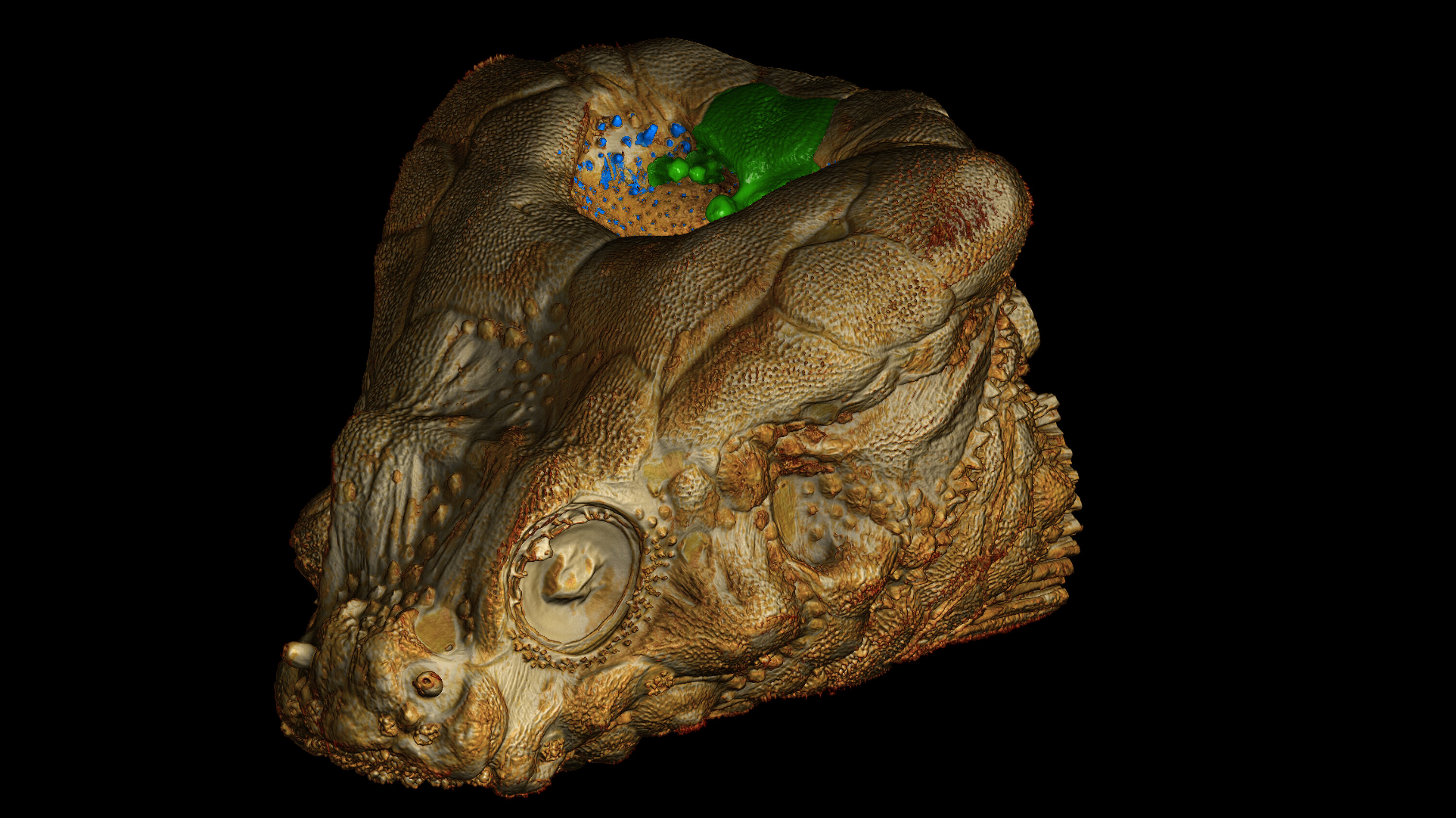
A unique cavity within the rockhead poacher's skull is now understood to function as a percussive instrument, a finding that has intrigued scientists for years. This small, finger-sized fish, found in the northeastern Pacific Ocean, employs its ribs to strike this cranial hollow, producing a distinctive buzzing sound. This anatomical marvel allows the rockhead poacher to generate noise far exceeding its size.
Researchers meticulously studied the fish's anatomy using micro-CT scans, revealing that its ribs are connected via tendons to powerful muscles. These are positioned to strike the pit, acting like drumsticks against a drum or the internal components of a maraca. Initially, the cavity was thought to be camouflage, resembling a rock crevice, but its internal structures suggested a more complex purpose.
In the challenging and noisy intertidal zone, with crashing waves and other sounds, this sound production system is a clever adaptation. It aids the rockhead poacher in communication and locating other fish by potentially vibrating against the seabed. This discovery highlights the extraordinary and often unexpected behavioral strategies found in marine species.