Home / Science / Robots Bloom Like Flowers Adapting to Light
Robots Bloom Like Flowers Adapting to Light
22 Jan
Summary
- Robotic swarms can dynamically adapt facades like flowers.
- Inspired by nature, robots mimic collective behavior of ants and birds.
- Princeton's Swarm Garden offers glimpse into adaptive living architecture.
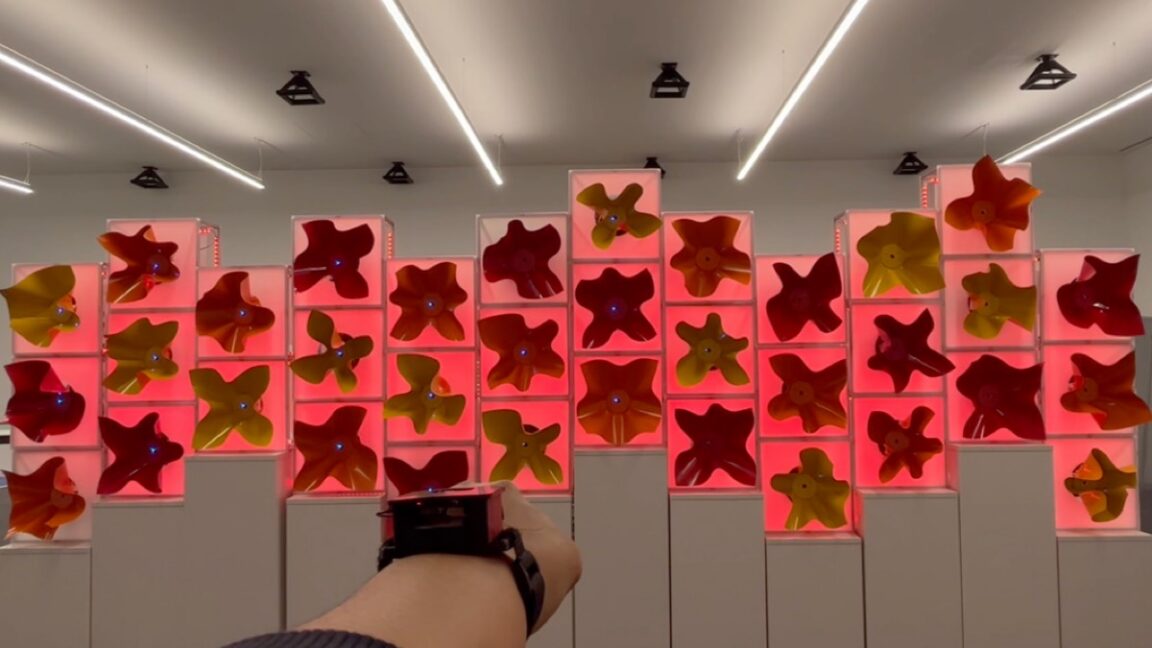
Princeton University researchers have created a "Swarm Garden," a collection of 40 interconnected mini-robots called SGbots. These robots can dynamically change their form, extending or retracting thin sheets to "bloom" or buckle, mimicking natural responses to environmental cues like light.
Inspired by the collective intelligence of ant swarms and flocking birds, the SGbots utilize a Wi-Fi network for communication and collective decision-making. This technology holds potential for architectural applications, such as dynamic building facades that adapt to changing sunlight for shading.
Demonstrated in two case studies, the Swarm Garden provided adaptive shading on an office window and served as an interactive art installation where users controlled bot movements via gestures. Future developments aim for real-world architectural feasibility and more sustainable materials.
This innovation envisions buildings inspired by "living architectures," featuring facades that continuously adapt to surroundings and occupants. The Swarm Garden offers a preview of this future, creating responsive, animated, and aesthetically pleasing built environments.