Home / Science / Rivers' Secret: Why Some Refuse to Mix
Rivers' Secret: Why Some Refuse to Mix
30 Jan
Summary
- Rivers maintain distinct boundaries due to temperature, density, and speed differences.
- Visible seams occur where rivers with varying physical properties meet.
- This phenomenon is observed in India, the Amazon, and Switzerland.
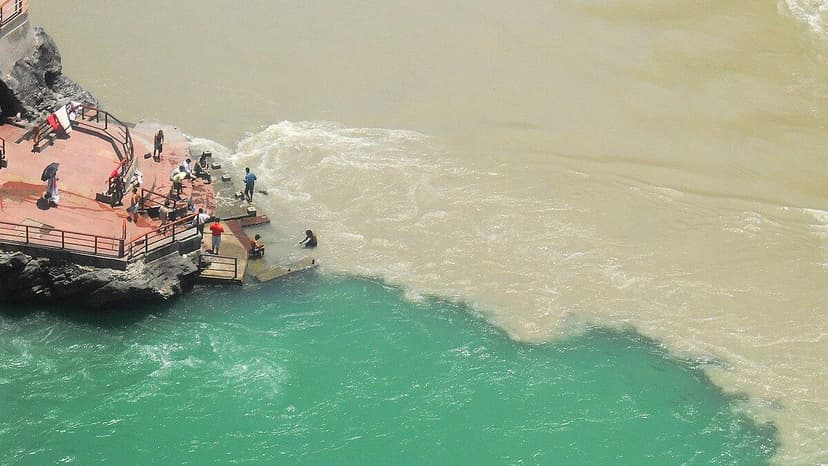
Two rivers can meet and flow side-by-side, maintaining separate identities due to distinct physical characteristics. This phenomenon, visible in locations like India's Devprayag, the Amazon rainforest, and Geneva, Switzerland, defies the common expectation of instant liquid mixing.
Rivers are complex systems carrying heat, sediment, and varying speeds. When these systems collide, differences in temperature, density, sediment load, flow speed, and chemical composition dictate their interaction. These factors create measurable boundaries rather than immediate blending.
Invisible physics, such as laminar flow and stratification, further slow the mixing process. Turbulence is required to break down the sharp lines between the water bodies. Mixing occurs on nature's timeline, often over significant distances and time, rather than instantaneously.
This slow mixing significantly impacts river ecology and can be used by scientists to track pollution and study climate change. The principle of distinct yet interacting elements extends beyond rivers to oceans, atmospheres, and ecosystems, illustrating a broader natural pattern of separation and interaction.