feedzop-word-mark-logo
searchLogin
Feedzop
homeFor YouUnited StatesUnited States
You
bookmarksYour BookmarkshashtagYour Topics
Trending
Terms of UsePrivacy PolicyAboutJobsPartner With Us

© 2026 Advergame Technologies Pvt. Ltd. ("ATPL"). Gamezop ® & Quizzop ® are registered trademarks of ATPL.

Gamezop is a plug-and-play gaming platform that any app or website can integrate to bring casual gaming for its users. Gamezop also operates Quizzop, a quizzing platform, that digital products can add as a trivia section.

Over 5,000 products from more than 70 countries have integrated Gamezop and Quizzop. These include Amazon, Samsung Internet, Snap, Tata Play, AccuWeather, Paytm, Gulf News, and Branch.

Games and trivia increase user engagement significantly within all kinds of apps and websites, besides opening a new stream of advertising revenue. Gamezop and Quizzop take 30 minutes to integrate and can be used for free: both by the products integrating them and end users

Increase ad revenue and engagement on your app / website with games, quizzes, astrology, and cricket content. Visit: business.gamezop.com

Property Code: 5571

Home / Science / Arctic Skies Glow: Rarer Than Northern Lights

Arctic Skies Glow: Rarer Than Northern Lights

11 Feb

•

Summary

  • Polar stratospheric clouds form in extremely cold polar winters.
  • Sunlight diffraction through ice crystals creates vivid colors.
  • These rare clouds are more elusive than the Northern Lights.
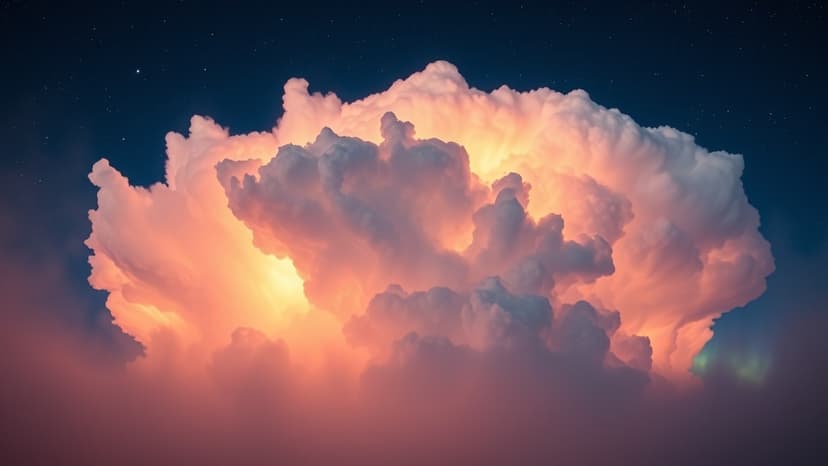
Arctic Skies Glow: Rarer Than Northern Lights

During the Arctic winter, a celestial event even rarer than the Northern Lights has captivated observers. Polar stratospheric clouds, also known as nacreous or "mother-of-pearl" clouds, appear in the stratosphere at exceptionally low temperatures, below minus 85 degrees Celsius. These clouds are composed almost entirely of ice crystals.

The stunning, iridescent colors seen in these high-altitude formations are a result of sunlight diffraction. As sunlight interacts with the tiny ice crystals, it bends and scatters, creating vibrant displays of pink, orange, yellow, and blue hues. These clouds are most visible during civil twilight, just before sunrise or after sunset.

While visually breathtaking, polar stratospheric clouds play a significant role in atmospheric chemistry. They provide surfaces on which chlorine compounds can react, accelerating ozone layer destruction, particularly over polar regions. Scientists monitor their formation closely due to this impact.

trending

Salesforce lays off 1000

trending

India US trade tariffs slashed

trending

Margot Robbie's Wuthering Heights panned

trending

CBSE board exams: key details

trending

Jana Nayagan movie court case

trending

Dhakshineswar Suresh Davis Cup hero

trending

Deepika Padukone wears Gaurav Gupta

trending

NZ vs UAE match prediction

trending

iPhone 17 Croma Valentine's sale

Disclaimer: This story has been auto-aggregated and auto-summarised by a computer program. This story has not been edited or created by the Feedzop team.
Polar stratospheric clouds (PSCs) are rare, high-altitude clouds that form in extremely cold conditions near the Earth's poles during winter.
Their vivid, shifting colors are caused by sunlight diffracting as it passes through the tiny ice crystals that make up the clouds.
Yes, PSCs contribute to ozone layer destruction by providing surfaces for chemical reactions involving chlorine and bromine compounds.

Read more news on

Scienceside-arrow

You may also like

Polar Vortex Weakens: Arctic Blast to Freeze Northeast

5 Feb • 31 reads

article image

Arctic Heat Fuels Extreme Weather Myths

27 Jan • 91 reads

article image

Millions Hit by Arctic Blast

24 Jan • 132 reads

article image

Severe Storm to Light Up Australian Skies Tonight!

20 Jan • 149 reads

article image

Aurora Alert: Northern Lights Visible Tonight!

12 Jan • 143 reads

article image