feedzop-word-mark-logo
searchLogin
Feedzop
homeFor YouUnited StatesUnited States
You
bookmarksYour BookmarkshashtagYour Topics
Trending
Terms of UsePrivacy PolicyAboutJobsPartner With Us

© 2026 Advergame Technologies Pvt. Ltd. ("ATPL"). Gamezop ® & Quizzop ® are registered trademarks of ATPL.

Gamezop is a plug-and-play gaming platform that any app or website can integrate to bring casual gaming for its users. Gamezop also operates Quizzop, a quizzing platform, that digital products can add as a trivia section.

Over 5,000 products from more than 70 countries have integrated Gamezop and Quizzop. These include Amazon, Samsung Internet, Snap, Tata Play, AccuWeather, Paytm, Gulf News, and Branch.

Games and trivia increase user engagement significantly within all kinds of apps and websites, besides opening a new stream of advertising revenue. Gamezop and Quizzop take 30 minutes to integrate and can be used for free: both by the products integrating them and end users

Increase ad revenue and engagement on your app / website with games, quizzes, astrology, and cricket content. Visit: business.gamezop.com

Property Code: 5571

Home / Science / Cosmic Twinkle: Pulsar Signals Decoded

Cosmic Twinkle: Pulsar Signals Decoded

7 Jan

•

Summary

  • Pulsar signals twinkle due to gas clouds in space.
  • SETI researchers used Allen Telescope Array for observations.
  • Scintillation helps distinguish cosmic signals from interference.
Cosmic Twinkle: Pulsar Signals Decoded

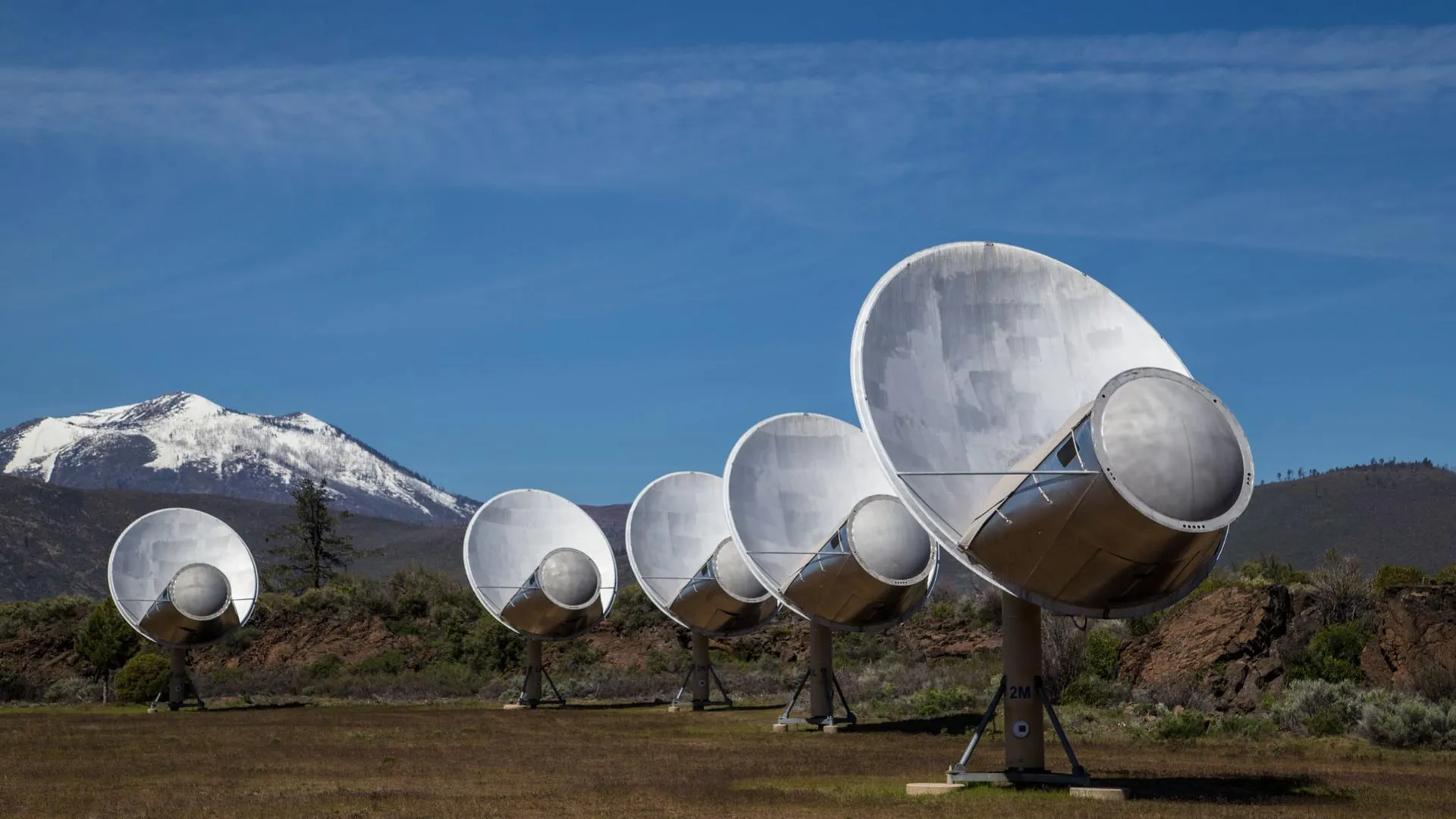
A research team, led by the SETI Institute, has completed nearly a year of close observation of the pulsar PSR J0332+5434. They focused on understanding the "twinkling" effect of its radio signals as they traverse interstellar gas clouds. Using the Allen Telescope Array, data was collected across radio frequencies from 900 to 1956 MHz, revealing slow but significant changes in scintillation.

Pulsars, remnants of exploded stars, emit radio flashes at precise intervals. However, interstellar gas scatters these signals, causing tiny delays. Researchers observed these evolving scintillation patterns, which correlate with signal delays, to develop precise timing corrections. These corrections are crucial for highly accurate astronomical experiments.

This study significantly benefits astronomy and the search for technosignatures. Understanding scintillation aids in differentiating natural cosmic radio signals from artificial interference. The Allen Telescope Array's wide bandwidths and long-term observational capabilities proved ideal for this project, offering insights into pulsars, Earth's motion, and the intervening space material.

trending

PG&E substation fires investigated

trending

Salt Lake City funeral shooting

trending

Nyjah Huston fractures skull

trending

Earthquake near Tennessee, North Carolina

trending

Mensik beats Casper Ruud

trending

Warriors beat Bucks at home

trending

Amazon Prime settlement refunds

trending

Jessica Pegula prevails in Brisbane

trending

Trail Blazers beat Rockets

Disclaimer: This story has been auto-aggregated and auto-summarised by a computer program. This story has not been edited or created by the Feedzop team.
The SETI Institute is studying how the radio signals from pulsar PSR J0332+5434 "twinkle" as they travel through interstellar gas clouds.
The Allen Telescope Array's wide bandwidths and long observation times are ideal for studying pulsar scintillation and signal timing.
Yes, understanding scintillation helps SETI researchers distinguish natural cosmic signals from artificial radio interference.

Read more news on

Scienceside-arrow

You may also like

Baby galaxy cluster defies cosmic rules

5 Jan • 12 reads

article image

Johns Hopkins Provost Moves to Lead Caltech

1 day ago • 22 reads

article image

Hubble Spots Cosmic Star Nursery

1 Jan • 41 reads

article image

Exotic Exoplanet Orbits Dead Star, Stretches to Lemon Shape

19 Dec, 2025 • 99 reads

article image

Cosmic Crashes Spotted: Hubble Reveals Space Rock Collisions

19 Dec, 2025 • 109 reads

article image