feedzop-word-mark-logo
searchLogin
Feedzop
homeFor YouUnited StatesUnited States
You
bookmarksYour BookmarkshashtagYour Topics
Trending
Terms of UsePrivacy PolicyAboutJobsPartner With Us

© 2026 Advergame Technologies Pvt. Ltd. ("ATPL"). Gamezop ® & Quizzop ® are registered trademarks of ATPL.

Gamezop is a plug-and-play gaming platform that any app or website can integrate to bring casual gaming for its users. Gamezop also operates Quizzop, a quizzing platform, that digital products can add as a trivia section.

Over 5,000 products from more than 70 countries have integrated Gamezop and Quizzop. These include Amazon, Samsung Internet, Snap, Tata Play, AccuWeather, Paytm, Gulf News, and Branch.

Games and trivia increase user engagement significantly within all kinds of apps and websites, besides opening a new stream of advertising revenue. Gamezop and Quizzop take 30 minutes to integrate and can be used for free: both by the products integrating them and end users

Increase ad revenue and engagement on your app / website with games, quizzes, astrology, and cricket content. Visit: business.gamezop.com

Property Code: 5571

Home / Science / Same-Sex Behavior in Primates Linked to Survival

Same-Sex Behavior in Primates Linked to Survival

2 Feb

•

Summary

  • Primates show same-sex behaviors in harsh environments.
  • Homosexuality may forge bonds crucial for group survival.
  • SSBs are more common in species facing environmental challenges.
Same-Sex Behavior in Primates Linked to Survival

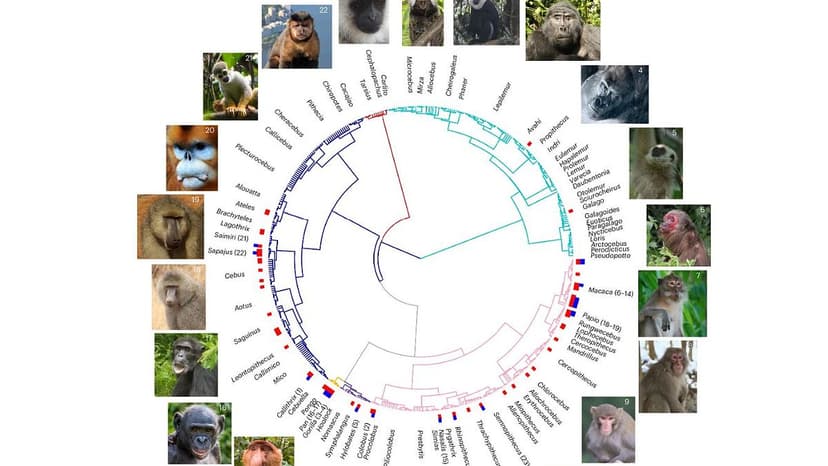
A recent study from Imperial College London proposes that same-sex behaviors (SSBs) in primates may serve as an evolutionary survival strategy. Researchers observed that SSBs are more prevalent in primate species facing difficult environmental conditions, such as drier habitats, scarcer resources, or increased predator presence. These challenging circumstances appear to favor the development of strong social bonds within groups.

The study analyzed data from 491 non-human primate species, identifying SSBs in 59. The findings suggest that homosexuality might help strengthen social cohesion, enabling groups to better withstand environmental pressures. For instance, tight-knit groups with established trust can respond more effectively to threats like predators.

While previous research indicated a possible genetic component to SSBs in some primates, this new analysis emphasizes the significant role of environmental and social factors. The experts suggest that SSBs have likely evolved multiple times across primate lineages, partly as a mechanism for navigating complex social and ecological systems. Further research is planned to explore these links directly.

Disclaimer: This story has been auto-aggregated and auto-summarised by a computer program. This story has not been edited or created by the Feedzop team.
Primates may exhibit same-sex behaviors in harsh environments and complex social groups, suggesting it helps forge strong survival bonds.
Same-sex behavior in primates is suggested to have evolved as a survival strategy by strengthening social cohesion and group survival against environmental challenges.
Researchers identified that 59 out of 491 non-human primate species studied engage in same-sex behaviors.

Read more news on

Scienceside-arrow
trending

Chelsea beats West Ham 3-2

trending

Liverpool, Newcastle face injury woes

trending

WWE Royal Rumble in Riyadh

trending

Barcelona faces Elche in LaLiga

trending

Goretzka staying at Bayern Munich

trending

ICC T20 World Cup squads

trending

Gold, silver ETFs crashed

trending

Curran, Pandya T20Is stats compared

trending

Suryakumar Yadav T20I record

You may also like

UK Universities Award Record Highs: First-Class Degrees Surge

17 hours ago • 4 reads

article image

Oxford University Embraces Inclusivity with Standardized Tests

27 Jan • 31 reads

article image

Dementia's Early Warning Signs Found

16 Dec, 2025 • 212 reads

article image

Europe's Water Crisis: South Dries Up, North Gets Wetter

29 Nov, 2025 • 431 reads

article image

Dogs & Humans: Shared Genes, Shared Traits!

30 Nov, 2025 • 304 reads