feedzop-word-mark-logo
searchLogin
Feedzop
homeFor YouUnited StatesUnited States
You
bookmarksYour BookmarkshashtagYour Topics
Trending
Terms of UsePrivacy PolicyAboutJobsPartner With Us

© 2026 Advergame Technologies Pvt. Ltd. ("ATPL"). Gamezop ® & Quizzop ® are registered trademarks of ATPL.

Gamezop is a plug-and-play gaming platform that any app or website can integrate to bring casual gaming for its users. Gamezop also operates Quizzop, a quizzing platform, that digital products can add as a trivia section.

Over 5,000 products from more than 70 countries have integrated Gamezop and Quizzop. These include Amazon, Samsung Internet, Snap, Tata Play, AccuWeather, Paytm, Gulf News, and Branch.

Games and trivia increase user engagement significantly within all kinds of apps and websites, besides opening a new stream of advertising revenue. Gamezop and Quizzop take 30 minutes to integrate and can be used for free: both by the products integrating them and end users

Increase ad revenue and engagement on your app / website with games, quizzes, astrology, and cricket content. Visit: business.gamezop.com

Property Code: 5571

Home / Science / Study: Same-Sex Acts Strengthen Primate Groups

Study: Same-Sex Acts Strengthen Primate Groups

12 Jan

•

Summary

  • Same-sex sexual behavior is common in 59 primate species.
  • Behavior is more likely in species facing scarce resources.
  • It helps increase bonding and decrease tension in groups.
Study: Same-Sex Acts Strengthen Primate Groups

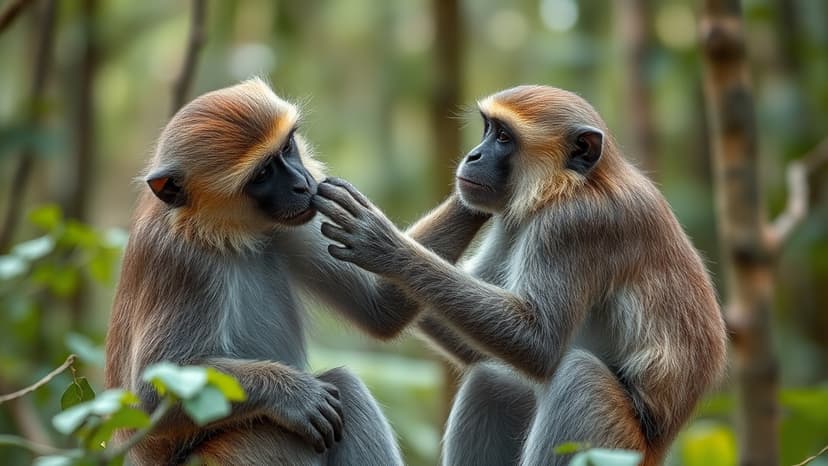
A recent study published in Nature Ecology & Evolution reveals that same-sex sexual behavior is a common occurrence across numerous primate species, appearing in 59 documented instances. Researchers propose this behavior plays a crucial role in strengthening social bonds and maintaining group stability, particularly when facing environmental or social pressures.

The analysis indicates a correlation between same-sex sexual behavior and species inhabiting drier environments with limited resources and higher predator threats. It also appears more frequently in species with longer lifespans and noticeable size differences between males and females, features often associated with complex social structures and competition.

These findings suggest that same-sex sexual behavior acts as an affiliative mechanism, fostering stronger connections, mitigating aggression, and helping primate societies navigate their specific challenges. While cautioning against direct human parallels, the study prompts consideration of modern social pressures on human behavior and social dynamics.

Disclaimer: This story has been auto-aggregated and auto-summarised by a computer program. This story has not been edited or created by the Feedzop team.
Professor Savolainen's study suggests same-sex sexual behavior in primates helps reinforce bonds and keep societies together amidst challenges.
Same-sex sexual behavior has been reported in 59 non-human primate species, including chimpanzees and gorillas.
The study found this behavior is more likely in species living in drier environments with scarce resources and greater predator risk.

Read more news on

Scienceside-arrow
trending

Pittman accused in synagogue fire

trending

Anthropic releases Claude Cowork feature

trending

Al Hilal beats Al Nassr

trending

Betterment crypto scam message

trending

Google stock: Strong performance in 2025

trending

FA Cup fourth-round draw

trending

Transfer portal rankings for Texas

trending

Tottenham close to Gallagher deal

trending

Koepka returns to PGA Tour

You may also like

Stone Age Hunters Used Toxic Arrows 60 Millennia Ago

8 Jan • 34 reads

article image

Animal Research Code Undergoing Major Overhaul

6 Jan • 38 reads

article image

Winter's Warmth: Nature Confused by Early December Heat

18 Dec, 2025 • 116 reads

article image

New Year Garden Trends: Climate-Proof Plants Lead the Way

15 Dec, 2025 • 162 reads

article image

Modern Life Overwhelms Our Ancient Biology

11 Dec, 2025 • 86 reads

article image