Home / Science / Gene Therapy Rewrites DNA for Rare Diseases
Gene Therapy Rewrites DNA for Rare Diseases
17 Feb
Summary
- New PERT method uses gene editing to fix nonsense mutations.
- Approach reprograms tRNA genes to override stop signals.
- Successful in cell models and mouse studies for genetic diseases.
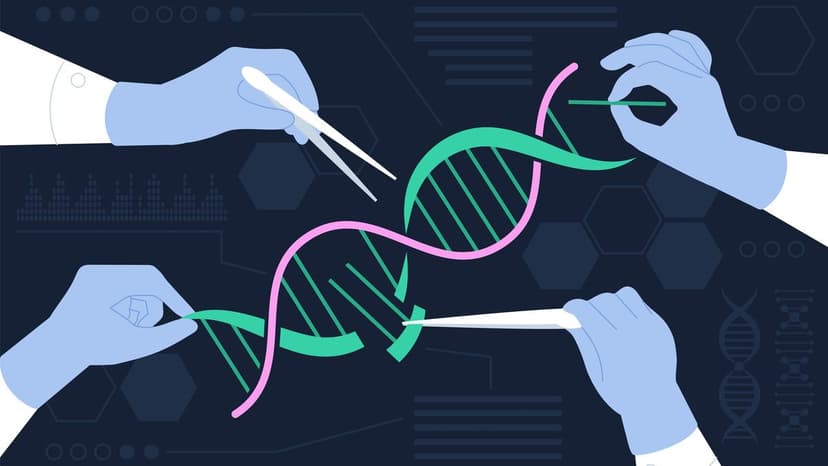
Researchers have developed a novel gene-editing strategy called PERT (Prime-Editing-mediated Readthrough of premature Termination codons) to address a wide range of genetic disorders caused by nonsense mutations. These mutations, which introduce premature stop signals in DNA, prevent the production of essential proteins.
The PERT approach reprograms a cell's own tRNA genes into suppressor tRNAs. Using prime editing, scientists can rewrite these genes to override faulty stop signals, allowing for the production of complete, functional proteins. This method was found to be highly efficient in cultured human cells.
This innovative technique has demonstrated therapeutic potential in cell models for diseases such as Batten disease, Tay-Sachs disease, and Niemann-Pick C1 disease. In mouse models of Hurler syndrome, PERT restored meaningful levels of enzyme activity in vital organs like the brain and liver, with no observed toxicity.
While challenges related to delivery and long-term safety remain, the PERT method represents a significant advancement. Its success in living organisms suggests a viable pathway toward clinical application for numerous rare diseases linked to nonsense mutations.