Home / Science / Food Harder to Catch for Penguins Under Antarctic Ice
Food Harder to Catch for Penguins Under Antarctic Ice
16 Jul
Summary
- Penguins must dive deeper as krill evade hunting zones.
- Prey accessibility, not just abundance, impacts penguin survival.
- Climate change and fishing threaten penguin food sources.
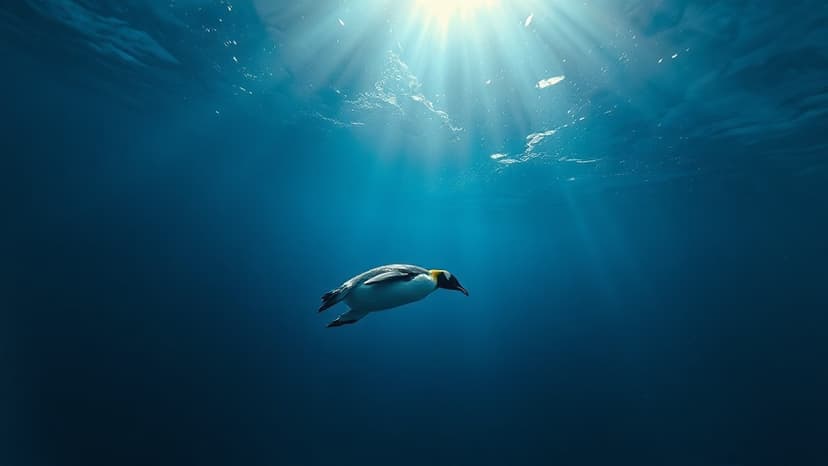
For penguins nesting in Antarctica, securing a meal has become more challenging than simply locating fish or krill. Recent scientific tracking of over 6,000 penguin dives has demonstrated that prey can become harder to catch even without a decline in numbers. This is because repeated hunting by penguins causes krill and fish to change their behavior, moving deeper or spreading out, thus forcing penguins to work harder.
This phenomenon, previously attributed solely to prey depletion near colonies, is now understood to involve prey behavior. Researchers observed Adélie penguins in East Antarctica, where concentrated hunting through sea ice holes led to penguins needing to dive deeper and swim further for prey. Importantly, feeding rates remained consistent, indicating that prey were present but less accessible.
Further research on chinstrap penguins in the Scotia Sea shows they strategically hunt during dawn and dusk, capitalizing on the daily vertical movements of krill. They prioritize hunting swarms that are at an easier diving depth, even if total krill abundance is lower elsewhere. This nuanced understanding of foraging is critical as climate change, warming oceans, and human activities like fishing reshape the Southern Ocean ecosystem.


