Home / Science / Tiny Probe Aids Webb's Hunt for Alien Worlds
Tiny Probe Aids Webb's Hunt for Alien Worlds
13 Jan
Summary
- Pandora satellite launched to calibrate exoplanet star data.
- It aims to solve stellar contamination issues affecting Webb's findings.
- The mission utilizes a $20 million budget, a fraction of Webb's cost.
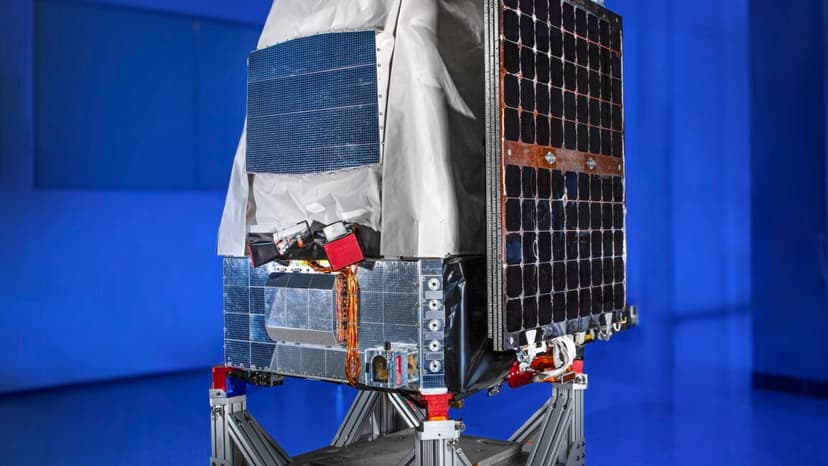
The Pandora satellite has recently been launched into orbit to support the James Webb Space Telescope's ambitious exoplanet research. This smaller, more affordable mission aims to tackle the challenge of "stellar contamination," where light from host stars can obscure the chemical signatures of exoplanet atmospheres, making it difficult to confirm the presence of life-essential molecules like water. Pandora's precise observations will calibrate Webb's data, ensuring greater confidence in identifying habitable worlds.
The Pandora mission, with a budget of $20 million, uses a unique approach by observing exoplanets and their stars concurrently from low-Earth orbit. This allows scientists to account for stellar variability and atmospheric signals, which can mimic or mask planetary detections. This technique is vital as Webb's schedule is fully booked, and Pandora offers a dedicated, cost-effective solution to refine exoplanet atmospheric analysis, building on discoveries made since the 2010s.
Launched aboard a SpaceX Falcon 9 rocket, Pandora's success highlights the growing capabilities of the small satellite industry and NASA's Astrophysics Pioneers program. By providing essential stellar context for Webb's observations, Pandora is set to unlock deeper insights into exoplanetary environments. This advancement is critical for astrophysicists navigating the rapid evolution of exoplanet science and advancing the search for Earth-like planets and potential life beyond our solar system.