Home / Science / Oman's Baobabs Fall to New Beetle Threat
Oman's Baobabs Fall to New Beetle Threat
25 Feb
Summary
- A new beetle species is killing ancient baobab trees in Oman.
- Six baobabs have died, and 12 more are infested by the beetle.
- Preventing spread to Africa requires urgent biosecurity measures.

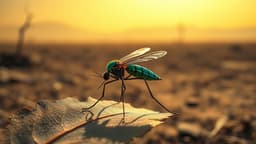
Ancient baobab trees, known for their remarkable resilience, are succumbing to a new threat in Oman: the mango stem-borer beetle. For the first time, an insect has been documented killing adult baobab trees, with six trees confirmed dead and 12 others infested. This alarming discovery was made by researchers investigating the impact of the beetle on the baobab population in Oman, where these trees were introduced over 1,500 years ago.
The mango stem-borer, native to Southeast Asia, has a life cycle that allows its larvae to tunnel through baobabs for nearly a year, weakening them from within until they collapse. Efforts in Oman to control the outbreak using insecticides and manual removal are labor-intensive and only feasible on a small scale. Scientists stress the urgent need to develop biological control methods and bolster biosecurity at African ports and borders.
If this beetle reaches mainland Africa, where baobabs are a keystone species, it could have catastrophic consequences for ecosystems and human livelihoods, given the trees' over 300 uses. Early detection and preventative measures are crucial. Collaboration between research institutions, agricultural departments, and the baobab industry is vital to share data, test controls, and establish monitoring systems. The situation in Oman serves as a critical warning, offering an opportunity for African nations to prepare and protect these iconic trees.