feedzop-word-mark-logo
searchLogin
Feedzop
homeFor YouUnited StatesUnited States
You
bookmarksYour BookmarkshashtagYour Topics
Trending
Terms of UsePrivacy PolicyAboutJobsPartner With Us

© 2025 Advergame Technologies Pvt. Ltd. ("ATPL"). Gamezop ® & Quizzop ® are registered trademarks of ATPL.

Gamezop is a plug-and-play gaming platform that any app or website can integrate to bring casual gaming for its users. Gamezop also operates Quizzop, a quizzing platform, that digital products can add as a trivia section.

Over 5,000 products from more than 70 countries have integrated Gamezop and Quizzop. These include Amazon, Samsung Internet, Snap, Tata Play, AccuWeather, Paytm, Gulf News, and Branch.

Games and trivia increase user engagement significantly within all kinds of apps and websites, besides opening a new stream of advertising revenue. Gamezop and Quizzop take 30 minutes to integrate and can be used for free: both by the products integrating them and end users

Increase ad revenue and engagement on your app / website with games, quizzes, astrology, and cricket content. Visit: business.gamezop.com

Property Code: 5571

Home / Science / New Space Race: Moon Missions Spark Global Rivalry

New Space Race: Moon Missions Spark Global Rivalry

2 Dec

•

Summary

  • Two new space alliances are forming to establish lunar presence.
  • Russia and China are partnering for joint lunar missions.
  • Geopolitics, not science, primarily drives the new moon race.
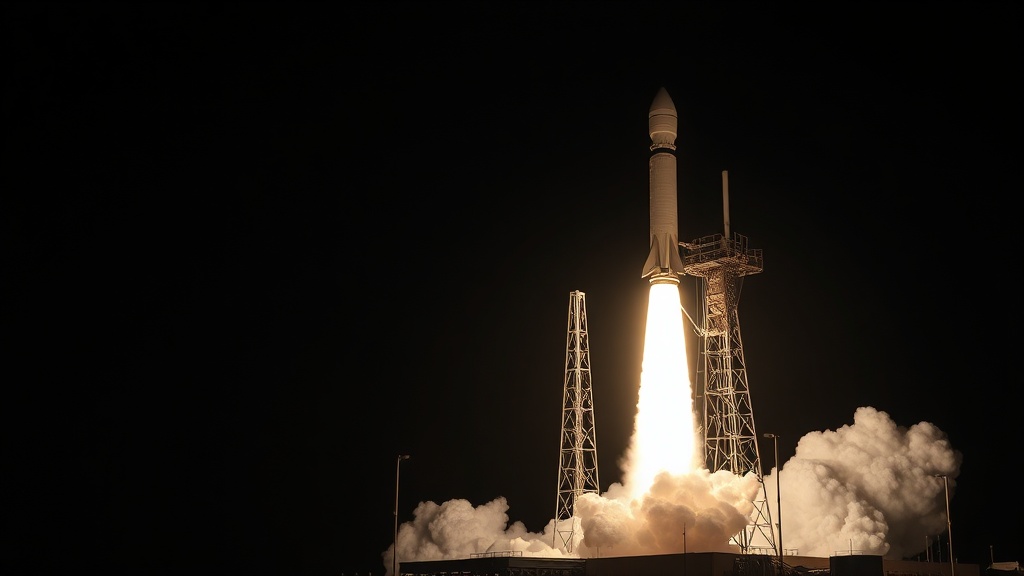
New Space Race: Moon Missions Spark Global Rivalry

The International Space Station's impending retirement in 2030 signifies a pivotal transition, moving from decades of international cooperation to a splintering of global space ambitions. Two major alliances are now shaping the future of space exploration, with a particular focus on lunar missions.

One bloc consists of Russia and China, who are strengthening their partnership with plans for joint lunar missions and a shared research station. This collaboration is fueled by Russia's rocket capabilities and China's technological advancements. On the opposing side, the United States, Europe, Canada, and Japan are advancing their own lunar programs under the Artemis initiative, driven largely by geopolitical aims and a desire for continued leadership in space.

Both coalitions are pursuing a permanent human presence on and around the moon, developing independent infrastructure and operational plans. While the scientific potential and commercial incentives, such as mineral extraction and lunar logistics, are being explored, the overarching motivation appears to be geopolitical positioning and securing a stake in future lunar governance and resource allocation.

Disclaimer: This story has been auto-aggregated and auto-summarised by a computer program. This story has not been edited or created by the Feedzop team.
The end of the ISS program will lead to a fragmentation of international space projects, with new parallel alliances forming and competing goals.
New alliances include Russia and China working together, and the US, Europe, Canada, and Japan collaborating under the Artemis program.
The primary drivers are geopolitical positioning and demonstrating a stake in lunar development, rather than purely scientific endeavors or immediate commercial returns.

Read more news on

Scienceside-arrowRussiaside-arrowChinaside-arrowCanadaside-arrow
trending

Raleigh Convention Center fire

trending

TSA Confirm.ID verification fee

trending

SpaceX launches Starlink satellites

trending

Andrew stripped of royal honors

trending

Puducherry schools closed, cyclone Ditwah

trending

JCPS defends school closure plan

trending

Oklahoma City school closings

trending

Ohio snow plow crash local

trending

Bay Area flood advisory

You may also like

Russia Charts Independent Space Path with New Orbital Station

26 Nov • 36 reads

article image

Doctor Warns: Everyday Drinks Harm Your Body

27 Nov • 18 reads

article image

ISS Meets Fiery End: New Space Stations Rise

23 Nov • 39 reads

article image

ISS Orbit Boosted for Spacecraft Maneuvers

19 Nov • 75 reads

article image

ISRO Triples Spacecraft Production, Targets 8% Global Space Market Share by 2030

18 Nov • 79 reads

article image