Home / Science / Extreme Amoeba Thrives in Boiling Springs
Extreme Amoeba Thrives in Boiling Springs
22 Sep
Summary
- New amoeba species survives division at 145.4°F.
- This microbe holds the heat tolerance record for eukaryotes.
- Discovery challenges understanding of complex life limits.
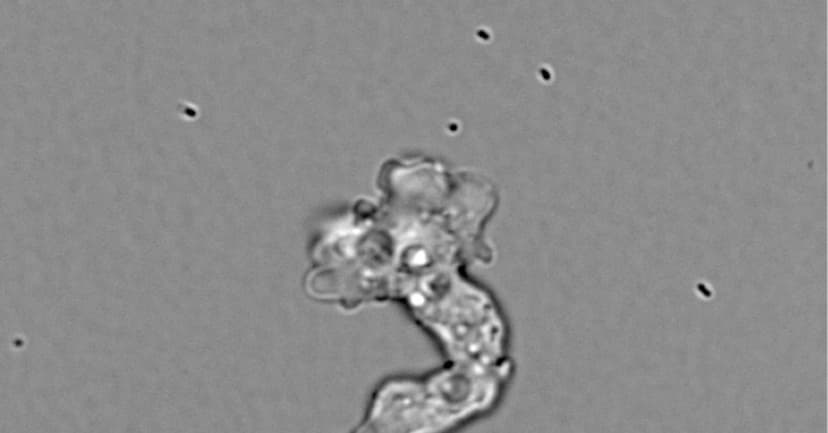
A remarkable new species of amoeba, named Incendiamoeba cascadensis, has been discovered in the geothermal hot springs of California's Lassen Volcanic National Park. This previously unknown microbe demonstrates an extraordinary ability to survive and reproduce at temperatures exceeding 145 degrees Fahrenheit (63 degrees Celsius), far beyond what was previously considered possible for complex life forms.
The organism's scientific name, meaning "fire amoeba from the Cascades," reflects its incredible heat tolerance. It can perform cellular division, or mitosis, at up to 145.4 F (63 C) and remain active at 147.2 F (64 C). Even when exposed to temperatures as high as 158 F (70 C), the amoeba can recover once returned to cooler conditions.
This finding significantly advances the known heat limits for eukaryotes, a broad category of organisms that includes humans, animals, plants, fungi, and protists. Researchers suggest this exceptional resilience may allow Incendiamoeba cascadensis to dominate its environment as a top predator, feeding on heat-loving bacteria without competition from other amoeba-eating organisms at these extreme temperatures.
The discovery, published in the journal Cell, prompts new questions about the fundamental constraints on cellular evolution and the potential for life in seemingly inhospitable environments on Earth and potentially beyond. It underscores the remarkable adaptability of life in extreme conditions.


