Home / Science / NASA Cleanrooms Hide Secret Life: 26 New Bacteria Found
NASA Cleanrooms Hide Secret Life: 26 New Bacteria Found
1 Jan
Summary
- 26 previously unknown bacterial species were discovered in NASA cleanrooms.
- These microbes possess genes enabling radiation resistance and DNA repair.
- Future experiments will simulate space conditions to test microbe survival.
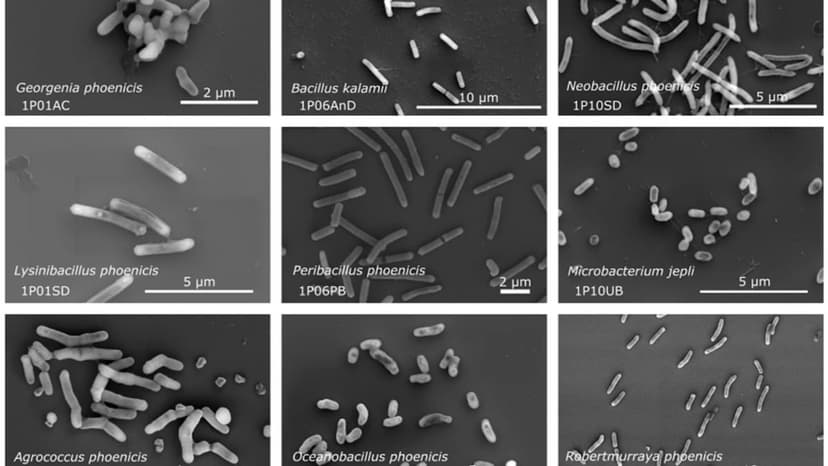
Scientists have identified 26 novel bacterial species thriving in NASA's highly controlled cleanroom environments at the Kennedy Space Center. These sterile facilities, designed to prevent contamination during spacecraft assembly, yielded a surprising discovery. The resilient microorganisms possess unique genetic traits that enable them to withstand extreme conditions, including radiation resistance and DNA self-repair capabilities.
These findings challenge the notion of absolute sterility in such environments, highlighting the persistence of life. The bacteria were originally collected in 2007 during the assembly of the Phoenix Mars Lander, and recent DNA analysis enabled their identification. Researchers aim to determine if these microbes could survive the rigors of space travel and Martian conditions.
Further studies will involve testing the bacteria in simulated space environments, with experiments slated to begin in early 2026. Beyond space exploration, these extremophiles hold significant promise for biotechnology, potentially driving advancements in medicine, pharmaceuticals, and the food industry due to their unique stress-resistant properties.