Home / Science / Neptune's moons reveal ancient cosmic smash-up
Neptune's moons reveal ancient cosmic smash-up
3 Aug
Summary
- Webb Telescope detected clay minerals on Neptune's inner moons.
- These minerals suggest a past catastrophic event involving a large world.
- A captured Pluto-sized moon likely caused the celestial demolition.
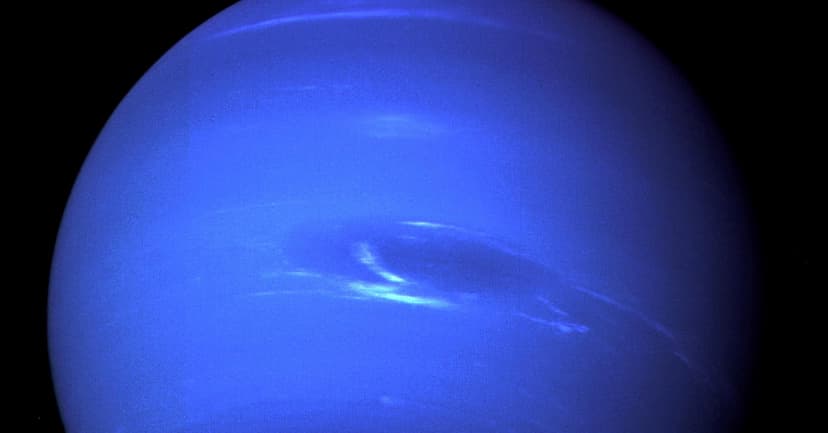
New data from the James Webb Space Telescope suggests Neptune's moons and rings bear the scars of a violent celestial event billions of years ago. Observations revealed clay minerals on small inner moons like Proteus, Larissa, and Galatea, as well as on dusty rings. These magnesium-rich minerals indicate they originated from the deep interior of a much larger, ancient world, as the moons themselves are too small and cold for such chemistry to occur.
The leading theory points to Triton, Neptune's largest moon, as the culprit. This body, originally from the Kuiper Belt and slightly larger than Pluto, was captured by Neptune's gravity during the solar system's chaotic early formation. Triton's gravitational influence likely caused Neptune's original moons to collide, leading to their destruction and the subsequent re-formation of the current inner moons and rings from the debris.
This capture event fundamentally altered Neptune's satellite system, which is unique among the giant planets for its lack of an ordered system of large regular satellites. Triton alone accounts for over 99% of the mass in Neptune's moon system. While another passing Kuiper Belt object is a less likely alternative, the evidence strongly supports a catastrophic past for Neptune, highlighting the solar system's dynamic and violent history.


